
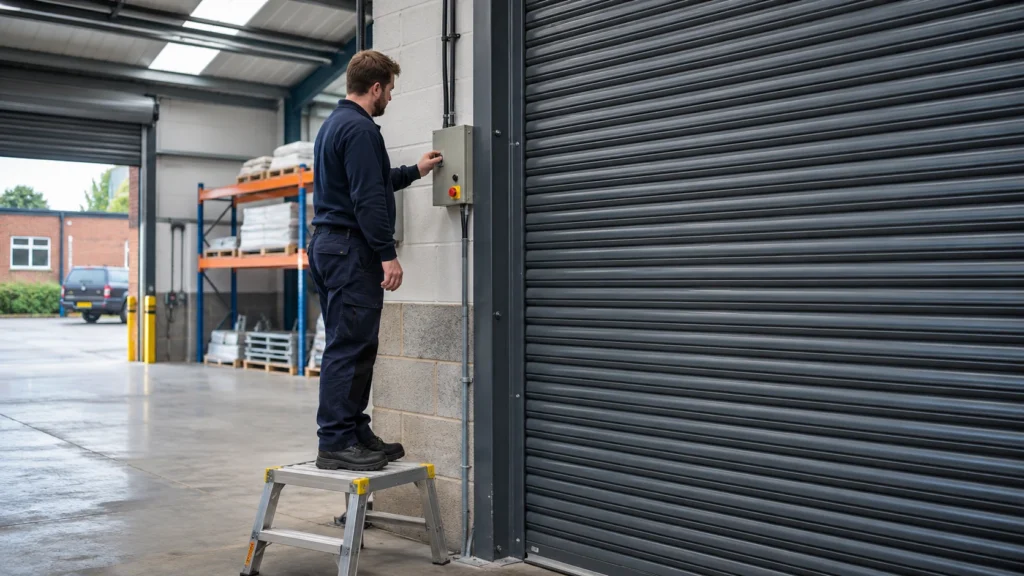
Roller shutter repair cost depends far more on what has gone wrong than on the shutter itself. A drifted limit setting, a bent guide rail, a damaged curtain and a burnt-out motor can all look the same from the street (“it won’t go down”), yet they involve very different amounts of time, parts and risk. This guide explains what drives the price of a commercial shutter repair in the UK, how to work out what kind of fault you probably have, what you can safely check yourself, when repair stops making sense and how to keep future bills down.
We are Sunrise Shopfronts & Shutters, a roller shutter manufacturer and repairer based in West Bromwich. Our engineers work on shopfront, warehouse and industrial shutters across Birmingham, the West Midlands and the rest of the UK. We have deliberately not published a price list: without seeing the shutter, any figure would be a guess. Instead, this guide shows you exactly what an engineer looks at, so you know what you are paying for.
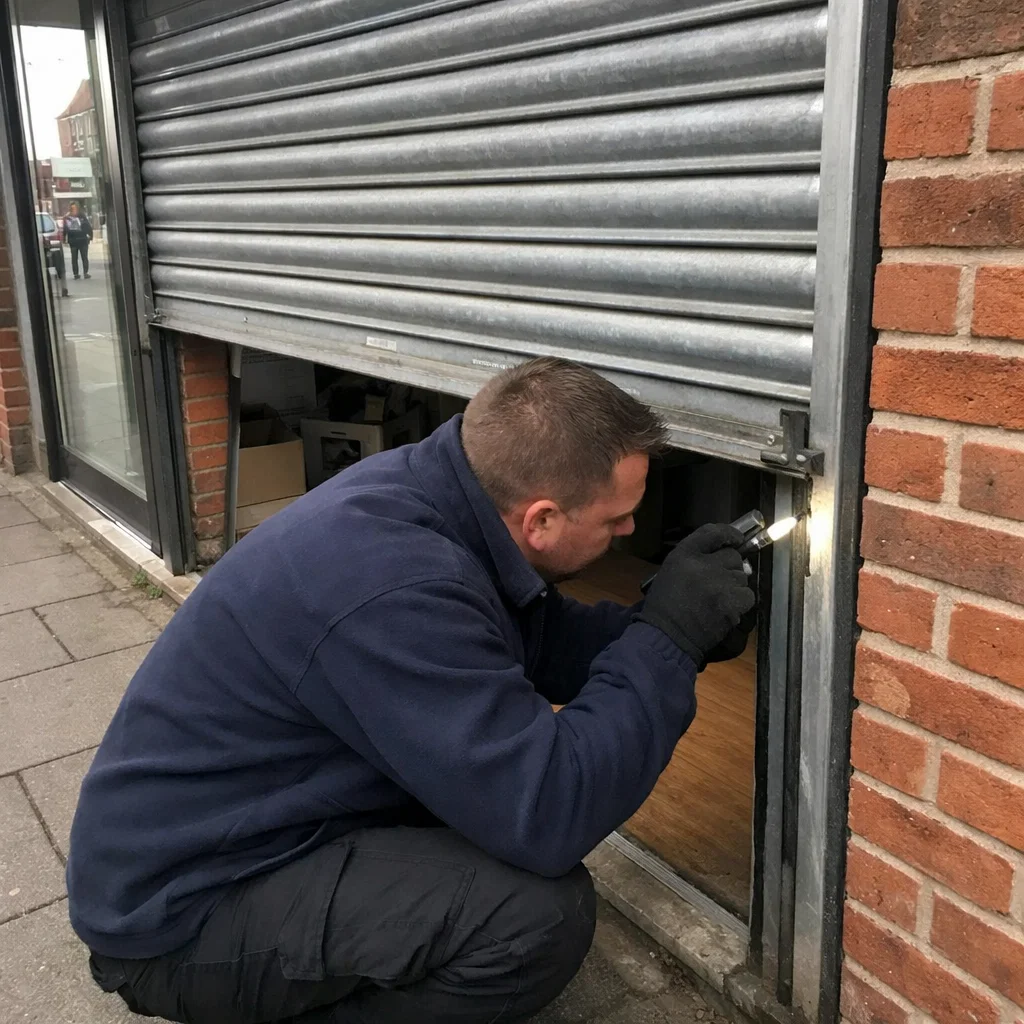
Key takeaways
- The fault sets the price. Adjustments and control faults are usually the smaller jobs; motors, springs and new curtains are the larger ones.
- Timing matters. Out-of-hours emergency call-outs cost more than planned visits, but are worth it if you are insecure or cannot trade.
- Forcing a struggling shutter is the most expensive mistake. Small faults become bent laths or a burnt-out motor.
- Some repairs need two visits: make safe now, then return with the right parts. That is good practice, not a sales tactic.
- Repair is usually right for an isolated fault on a sound shutter; replacement makes sense after widespread damage or repeated breakdowns.
- A clear description and a photo when you call help the engineer bring the right parts and fix it first time.
In this guide
- Roller shutter repair cost: the quick answer
- The parts of a roller shutter that fail
- Symptom checker: what is your shutter doing?
- Safe checks to make before you call
- Eight factors that move the price
- Common repairs and what they involve
- Emergency or planned repair?
- Why some repairs need two visits
- What makes a repair bill bigger
- Repair or replace?
- How to get an accurate repair quote
- How to compare repair quotes
- Questions to ask your engineer
- How to keep future repair costs down
- Your legal duties as a business
- Frequently asked questions
Roller shutter repair cost: the quick answer
Almost every roller shutter repair bill is built from the same five things:
- Labour and attendance: time on site, one engineer or two, and planned or out-of-hours emergency.
- Parts: from a few laths or a key switch up to a new motor, springs, control panel or complete curtain.
- Access: a ladder, or a tower or powered access platform.
- Number of visits: fixed in one go, or made safe now and finished once parts arrive.
- Safety work: whether safety edges, photocells and fall-back protection need putting right.
The cheapest repair is usually an early one, on a well-kept shutter, in one planned visit. The most expensive is usually an emergency call-out to a shutter that was forced after it started to struggle.
The parts of a roller shutter that fail
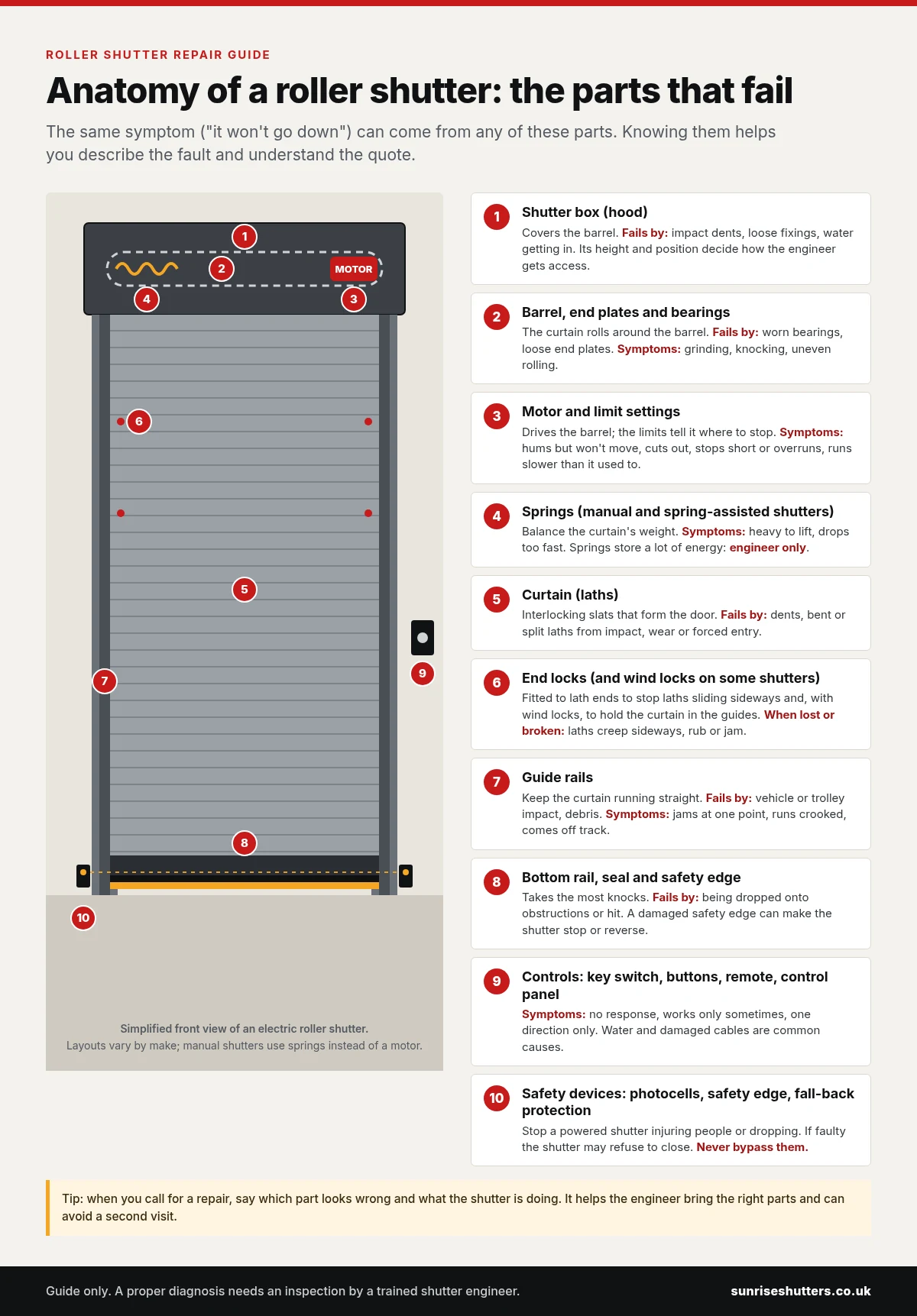
It helps to know the main parts of a shutter and what typically goes wrong with each. The diagram shows a simplified electric roller shutter; manual shutters use springs to balance the curtain instead of a motor.
Controls and electrics
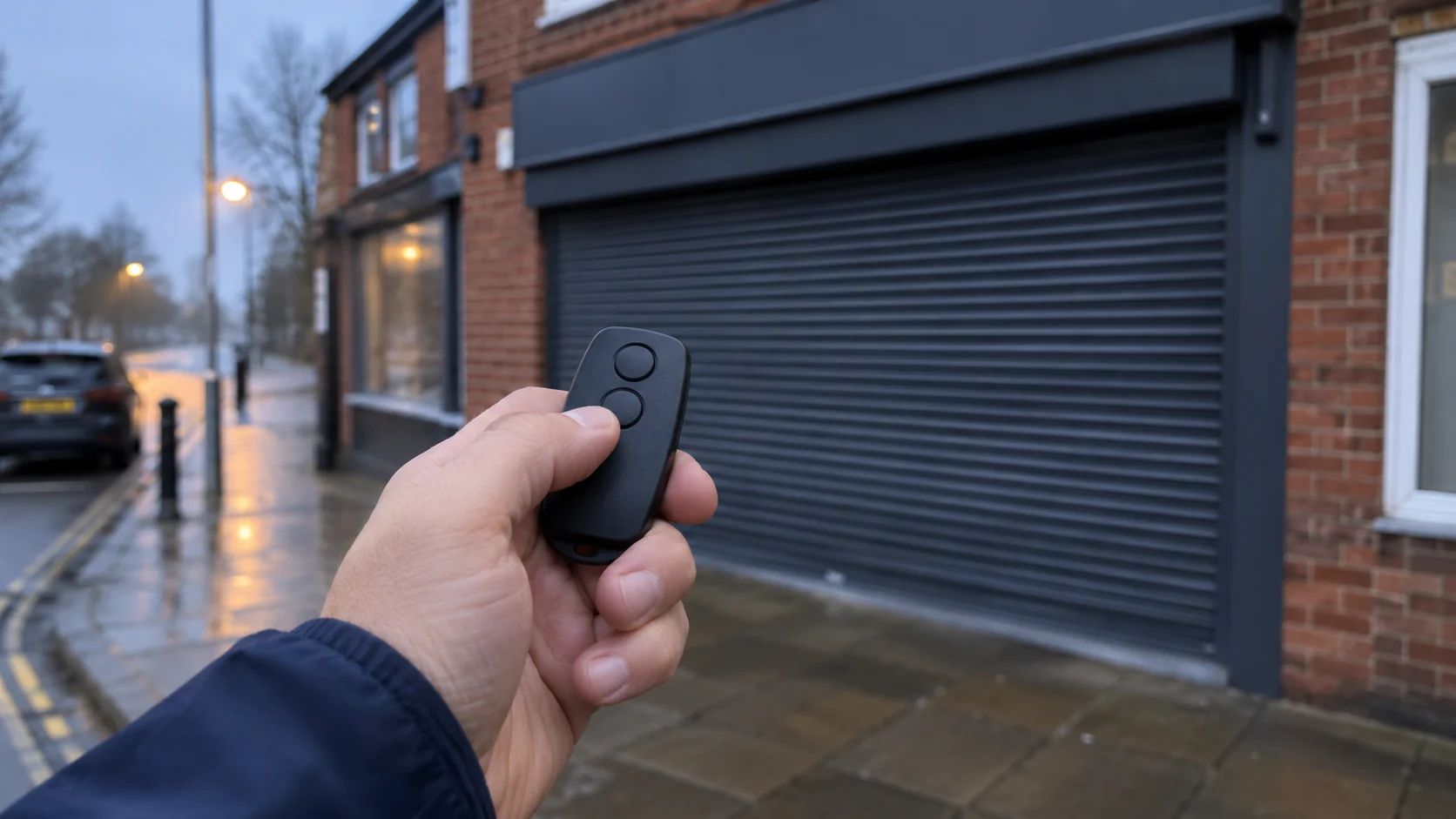
Key switches, push buttons, remotes, receivers and the control panel can all fail. Some faults are quick to fix once found, such as a handset that needs reprogramming or a damaged key switch cable. Intermittent faults and water in a control box take longer to trace. If your issue is specifically a remote or fob, our guide to what to do when a roller shutter remote is not working covers the safe checks you can make first.
Motor and limits
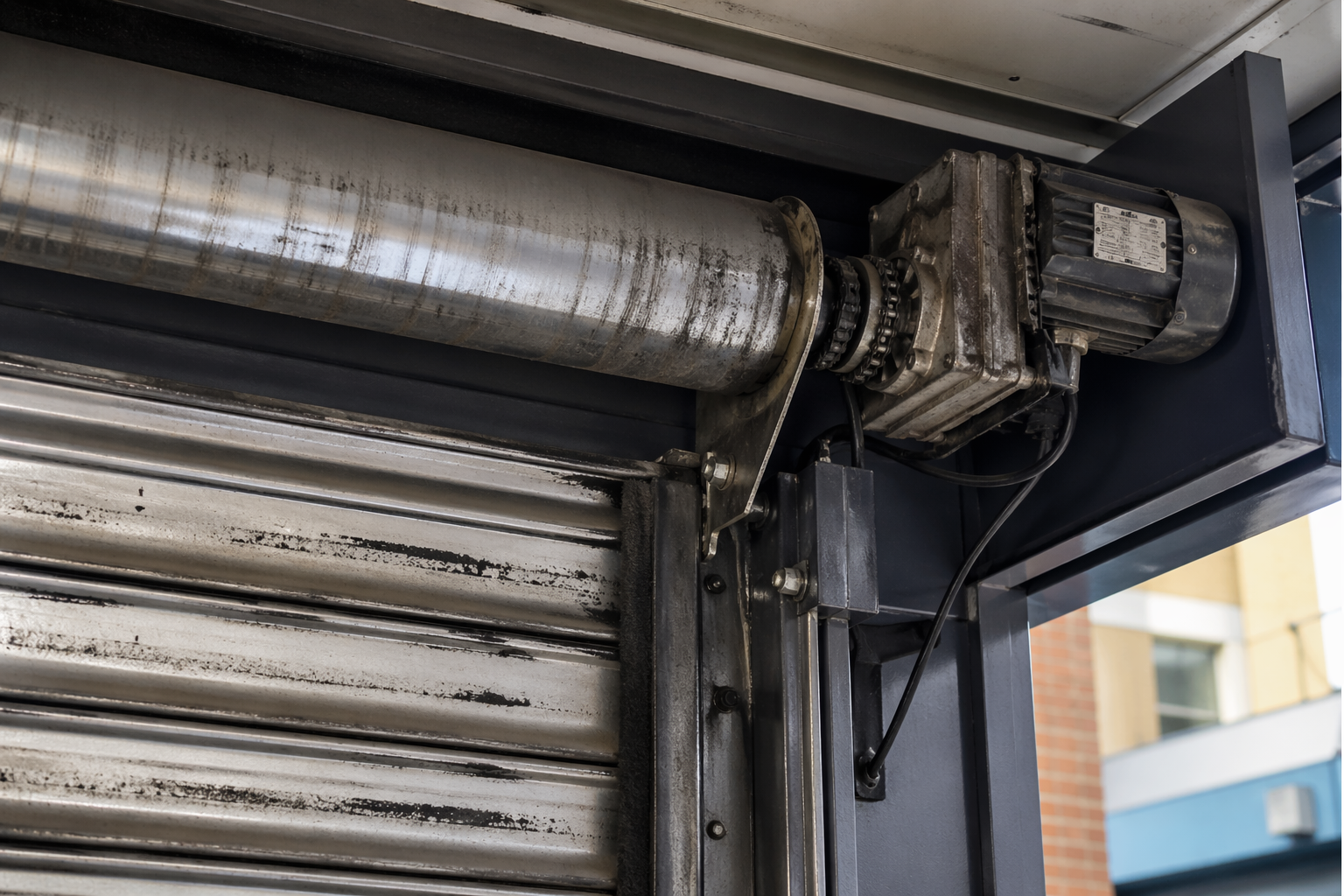
A motor that hums but does not turn, overheats, cuts out or runs slower than it used to may need repair or replacement. Replacement is one of the larger repair costs, because the motor must be matched to the curtain’s weight and fitted at height. The motor is not always the root cause, though: a curtain dragging in a damaged guide makes any motor struggle, so a good engineer checks the whole shutter first. On older shutters an upgraded motor can be the better answer, as explained in our article on the signs it is time to upgrade your shutter motor.
Curtain and laths
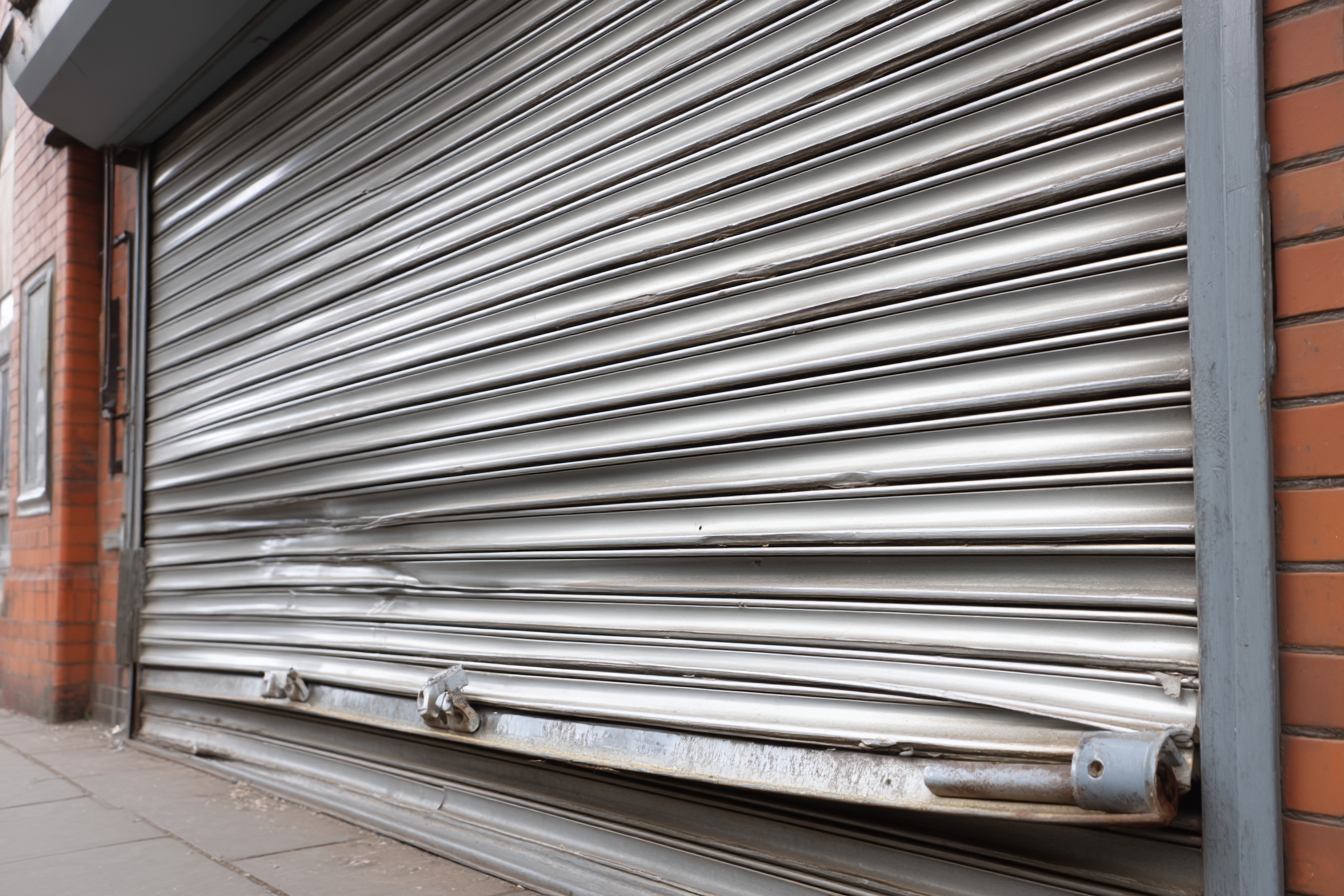
The curtain is the moving “door” made from interlocking laths. Vehicles, trolleys, forced entry or years of use can dent or split laths and pull end locks loose. Limited damage can often be fixed by replacing a few laths; a curtain twisted across its width, or one whose lath profile is no longer made, may need replacing. The material matters too: our comparison of steel vs aluminium roller shutters explains how each behaves when it is hit.

Guide rails and bottom rail
A bent guide rail makes the curtain jam, run off line or wear unevenly, and makes the motor work harder. Fixing a guide is often a moderate job, but the curtain should be checked too. The bottom rail takes more punishment than any other part, from impacts and from landing on anything left in the drop zone.
Springs, barrel and bearings
Manual shutters rely on springs to balance the curtain. A weak or broken spring makes the shutter heavy to lift or makes it drop too quickly. Spring work is never DIY: springs store a great deal of energy. Bearings, brackets and end plates also wear on busy shutters, usually showing first as grinding or knocking.
Safety devices
Powered commercial shutters should have suitable safety features, such as a safety edge, photocells and protection against the curtain falling back. When these are damaged, dirty or out of adjustment, the shutter may stop, reverse or refuse to close. They should be repaired, never bypassed. We cover the legal side in more detail in our guide to roller shutter safety regulations in the UK.
Symptom checker: what is your shutter doing?
Engineers price repairs around the fault, so describing the symptom accurately is the most useful thing you can do. Use this table as a guide; the same symptom can have more than one cause.
| What the shutter is doing | Likely causes | Safe check you can make | Call an engineer when |
|---|---|---|---|
| No response at all, no sound | Power supply, isolator switched off, tripped circuit, control or receiver fault, motor thermal cut-out | Check the premises has power and the shutter’s isolator is on. Try a different control (key switch instead of remote). | Power is fine and it still does nothing, or a circuit keeps tripping. |
| Hums but does not move | Motor, brake or gearbox fault; curtain jammed in the guides | Stop pressing the button. Look for anything blocking the guides or the drop zone. | Straight away. Repeated attempts can burn out the motor. |
| Stops part way or reverses | Safety edge or photocell triggered, limit settings drifted, obstruction, motor overheating | Clear the opening. Gently wipe photocell lenses with a dry cloth. Check the safety edge is not visibly damaged. | It keeps happening, or it stops at a different point each time. |
| Runs crooked or one side drops first | Bent guide, lost end locks, damaged laths, barrel or bracket problem | Look (do not touch) for dents in the guides and laths that have shifted sideways. | Now. Stop using it: running a crooked curtain spreads the damage. |
| Grinding, scraping or knocking | Dirt in the guides, worn bearings, damaged laths rubbing, loose fixings | With the shutter stopped, look for debris or visible damage in the guides. | Soon. Book a planned repair before it becomes an emergency. |
| Much slower than it used to be | Motor wearing, curtain dragging in damaged guides, motor struggling with the curtain’s weight | Note whether it is slow all the way or only at one point. | Book a planned repair or motor assessment. |
| Manual shutter heavy to lift, or drops fast | Spring tension lost or a spring broken | None. Do not try to adjust springs. | Straight away if it drops on its own. Keep people clear. |
| Curtain has come out of the guides | Impact, wind load, missing end locks or wind locks | Keep everyone away. Do not operate it. | Immediately. Use the emergency line if the premises are insecure. |
| Remote does nothing, key switch works | Handset battery, handset lost its programming, receiver fault | Replace the handset battery and try a spare handset if you have one. | No handset works, or the receiver shows no sign of life. |
| Will not lock, or leaves a gap at the bottom | Bent bottom rail, limit set too high, debris under the curtain, damaged lock | Check the floor under the shutter is clear. | Same day if the premises cannot be secured. |
If your shutter will not close at all, our dedicated guide to why a roller shutter won’t close and when to call an emergency repair goes into each cause in more depth.
Safe checks to make before you call
A few simple checks can save a call-out or help the engineer bring the right parts. Stop if anything looks damaged or unsafe.
- Make the area safe. Keep people and vehicles away, and never walk under a shutter stuck part way.
- Stop operating it if it has jammed, is running crooked or is making a new noise.
- Check the power. Is there power to the rest of the premises? Is the shutter’s isolator switched on? Has anything tripped? Do not open the control panel: it contains mains voltage.
- Try another control. If the remote does nothing, try the key switch or push button, and replace the handset battery.
- Check the opening. Look for stock, bins, stones or debris in the guides or under the shutter, and wipe the photocell lenses gently with a dry cloth.
- Allow a cooling period. Many shutter motors have a thermal cut-out that stops them after repeated use. If the shutter stopped after being run several times in a row, leave it to cool, then try once. If it stops again, call.
- Take photos and notes of the shutter, guides and bottom rail from a safe distance, and note any impact, power cut, heavy rain or attempted break-in.
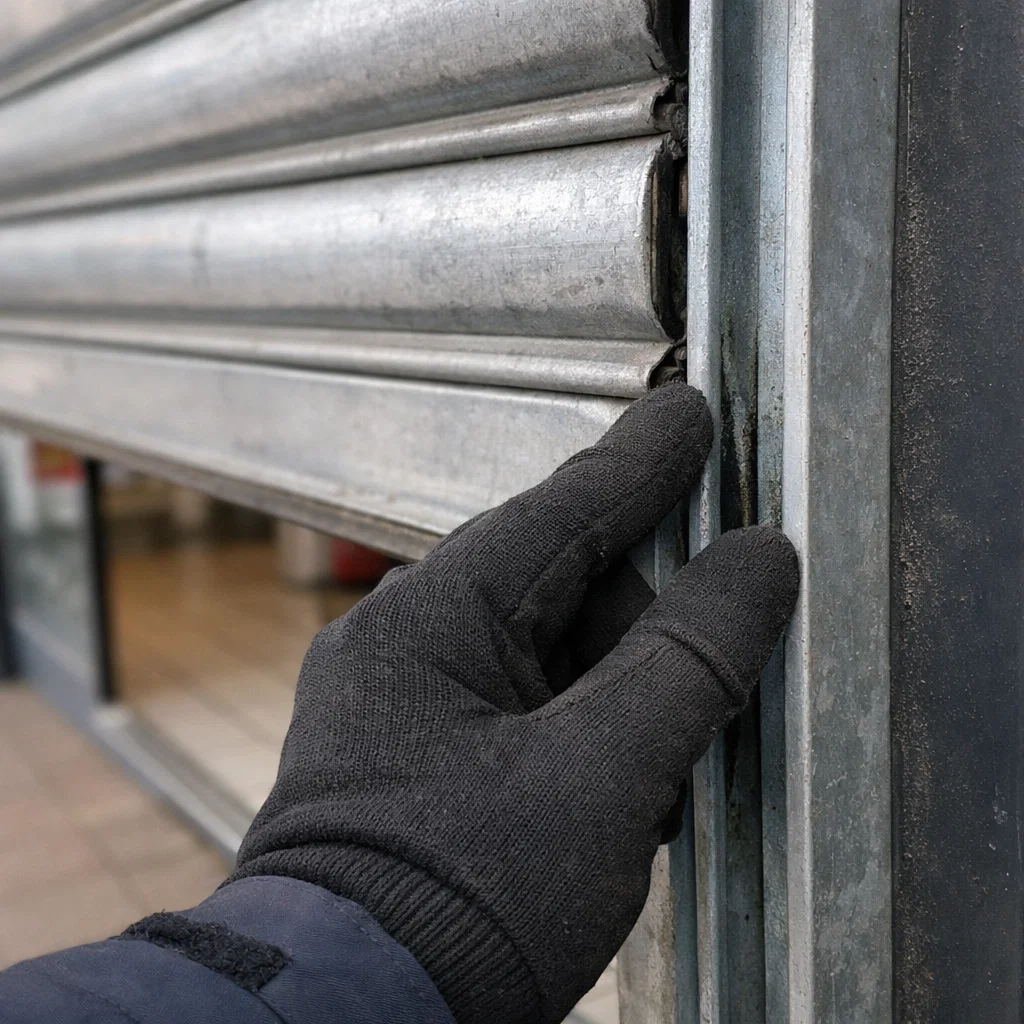
Do not: force the curtain up or down by hand, hold the button while the motor strains, adjust or release springs, open the control panel, bypass safety edges or photocells, or prop up a damaged shutter with timber. Each of these can injure someone and can turn a modest repair into a major one.
Eight factors that move the price
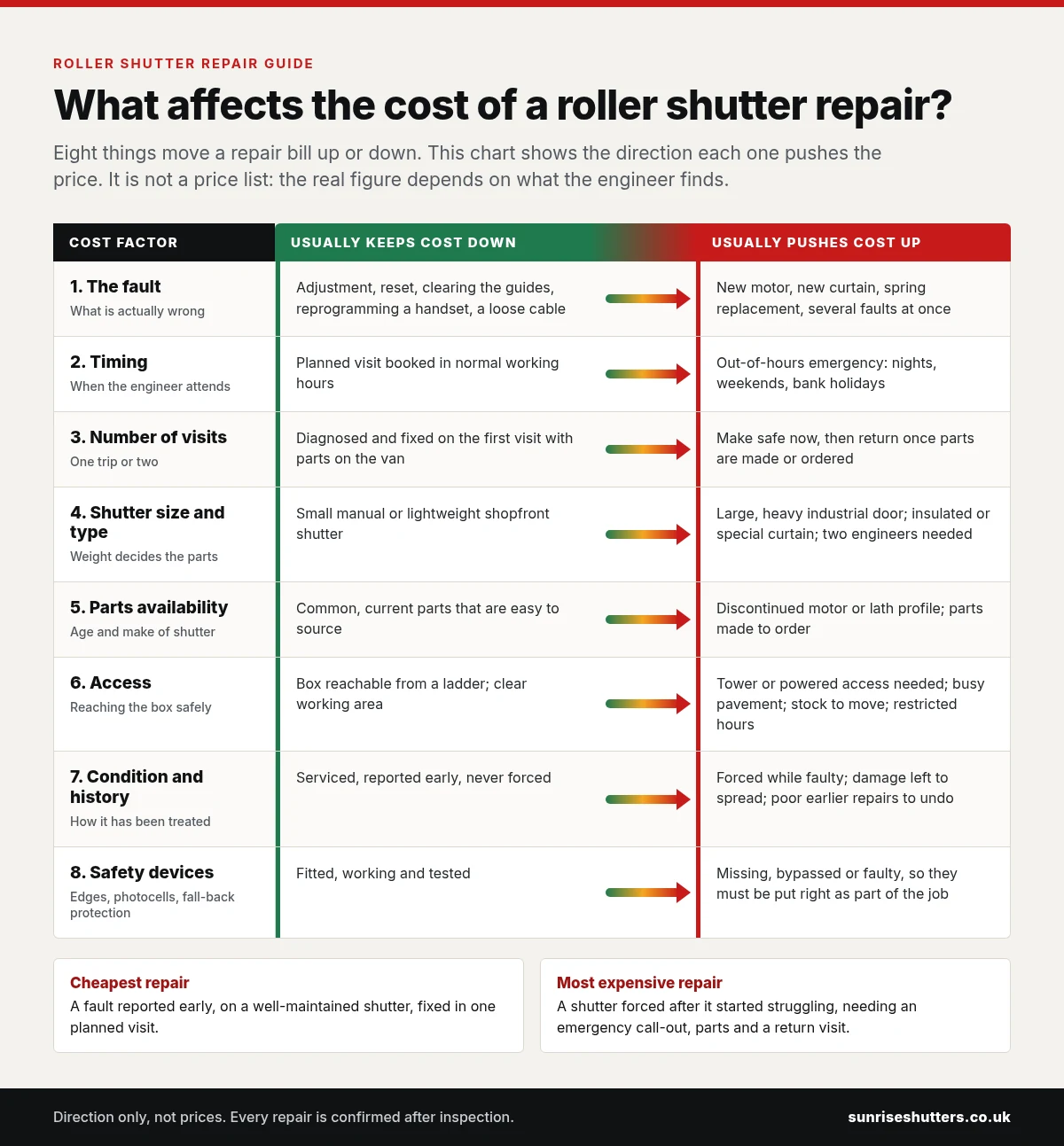
Once the fault is known, these eight factors decide where the bill sits. The chart shows the direction each pushes the price; it is not a price list.
1. The fault itself
The biggest factor by far. Resetting a limit, reprogramming a handset or replacing a key switch are usually smaller jobs; a new motor, springs or a new curtain sit at the other end, and several faults at once cost more than one.
2. Emergency or planned visit
An emergency call-out at night, at a weekend or on a bank holiday costs more than a booked visit in normal working hours. If the premises are exposed or you cannot trade, it is usually worth it. Our 24/7 emergency shutter repair service is answered 24 hours a day, 365 days a year, and we usually have an engineer with you within 2 hours.
3. One visit or two
If parts on the van will do, the job is done in one visit. If a part must be made or ordered, the opening is made safe first and the engineer returns to finish (see why some repairs need two visits).
4. Size, weight and type of shutter
A small shopfront shutter is a very different job from a large powered warehouse door. Heavier curtains need heavier parts and sometimes two engineers, and insulated, perforated and punched curtains use different lath profiles.
5. Age and parts availability
Parts for modern shutters are usually easy to source. Older or unbranded shutters can be harder, as lath profiles change and motors are discontinued. Because we manufacture shutters in our own West Midlands workshop, we can talk you through the options when matching parts are hard to find.
6. Access and site conditions
Boxes high on a shopfront, above a canopy or over a loading bay may need a tower or powered access. Busy pavements, restricted hours and stock that has to be moved all add time.

7. Condition and history
A shutter that has been serviced and reported early is quicker to repair than one forced while faulty or patched badly in the past.
8. Safety devices and compliance
If safety edges, photocells or fall-back protection are missing, disconnected or faulty, a responsible engineer will tell you, and putting them right may form part of the repair.
Shutter stuck, damaged or leaving you insecure?
Our emergency line is answered 24 hours a day, 365 days a year, and we usually have an engineer with you within 2 hours to make the opening safe and plan the right repair.
Common repairs and what they involve
The table below compares the repairs we are asked about most often. The “relative cost” column is a general guide to how these jobs usually compare with each other, not a price. Your shutter may differ.
| Repair | What it usually involves | Often done in one visit? | Relative cost |
|---|---|---|---|
| Limit adjustment or control reset | Finding why the shutter stops in the wrong place or does not respond, then resetting and testing | Usually | Lower |
| Remote, receiver or key switch | Reprogramming handsets, replacing a damaged key switch, repairing cabling | Usually | Lower |
| Guide clean, realign or straighten | Clearing debris, refixing loose guides, straightening minor dents | Usually | Lower to medium |
| Replace a few laths or end locks | Removing damaged laths and fitting matching sections | Depends on matching parts being available | Medium |
| Bottom rail or safety edge | Replacing a bent rail or damaged edge, retesting safety functions | Sometimes | Medium |
| Replace a guide rail | Removing and refixing a guide, checking the curtain for damage | Sometimes | Medium |
| Springs (manual shutters) | Safely releasing and replacing springs, then rebalancing the curtain | Sometimes | Medium to higher |
| Motor replacement or upgrade | Matching a motor to the curtain weight, fitting at height, setting limits, testing | Often needs a return visit | Higher |
| New curtain | Measuring, making a curtain for the opening, removing the old one and fitting | No: made to measure | Higher |
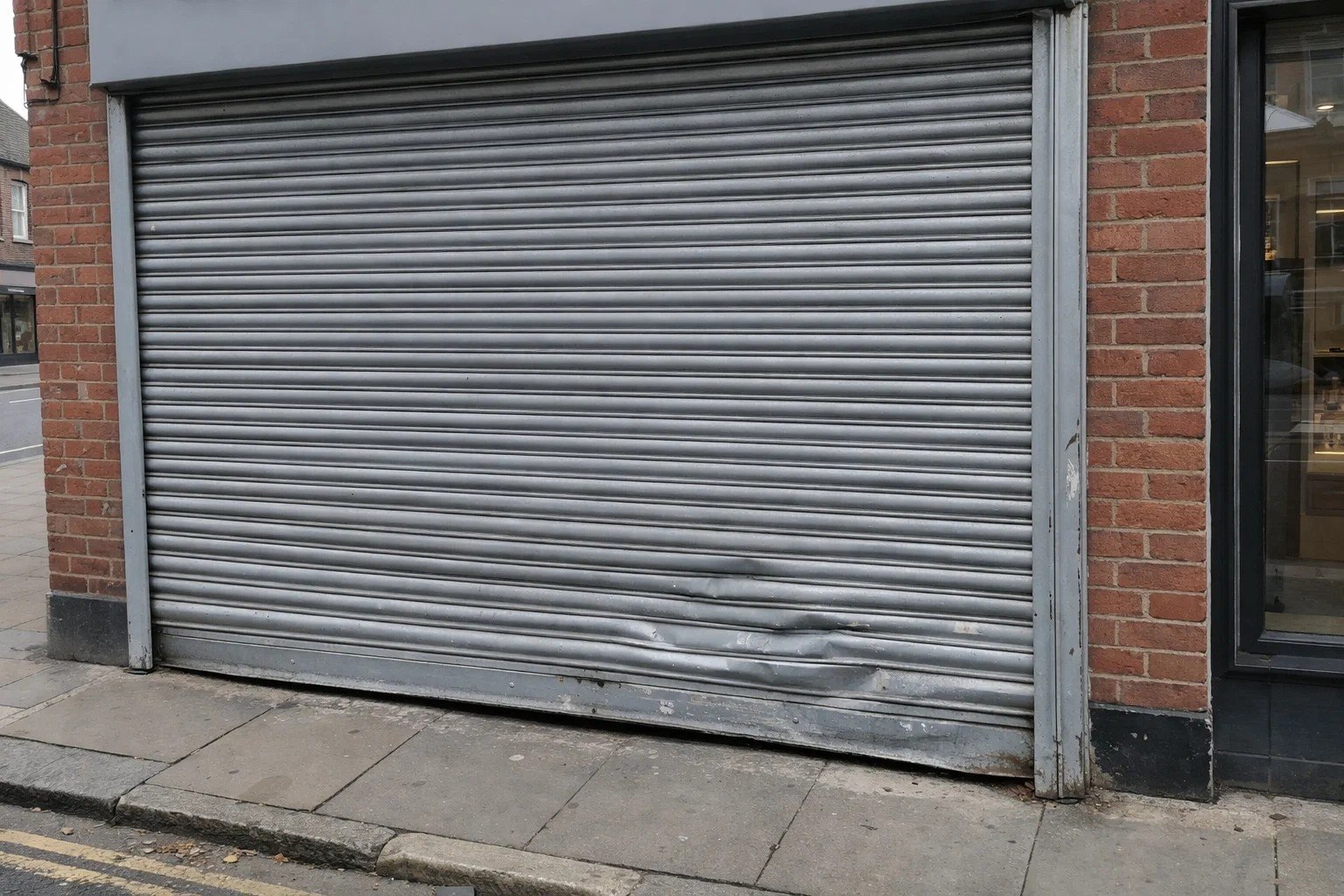

Emergency or planned repair?
Choosing the right type of visit is one of the easiest ways to control cost. If the shutter still opens, closes and locks, a planned visit is better value. If it does not, or someone could get hurt, it is an emergency.
| Call the emergency line if… | Book a planned repair if… |
|---|---|
| The shutter is stuck open and the premises cannot be secured | It still opens, closes and locks, but is noisy |
| It is stuck closed and you cannot open to trade or get vehicles out | It is slower than it used to be |
| The curtain has come out of the guides or is hanging unevenly | The remote is unreliable but the key switch works |
| There has been a break-in, attempted break-in or vehicle impact | There is minor cosmetic damage to the curtain |
| A manual shutter drops on its own or a spring has broken | It catches slightly at one point but completes its travel |
If you are not sure whether it can wait, call the emergency line anyway and we will help you decide. If you are already dealing with a stuck or damaged shutter, our guide to the first 30 minutes of a shutter emergency explains what to do while you wait for an engineer.
★★★★★
“I had an emergency with my shutter garage door on a Sunday and was dreading the wait, but Sunrise Shopfronts and Shutters came out remarkably quickly. The engineer was professional, friendly, and got straight to work diagnosing the problem. Nothing was too much trouble for him, and he had everything fixed and working perfectly in no time.”
Kam Kang, Google review
Why some repairs need two visits
If a motor, springs or laths have to be made or ordered, a good engineer first makes the opening safe and secure, then returns to complete the permanent repair. That can mean two visits on the invoice, but it is far cheaper than leaving premises exposed or forcing a damaged shutter back into use.
What matters is clarity. Your engineer should tell you plainly which work is temporary and which is the permanent repair, what parts are needed and roughly when they expect to return. That is how we work: if the shutter cannot be fixed straight away, we make the premises secure and come back to complete the full repair, and we will never present a temporary measure as a finished job.

After a break-in, report it to the police before anything is moved, and keep the crime reference number for your insurer. Our guide to shutter damage after a break-in: repair vs temporary securing walks through the decisions in detail.
What makes a repair bill bigger
Some things reliably make a repair cost more. Most of them are avoidable:
- Forcing the shutter. Pulling down a jammed curtain by hand, or holding the button while the motor strains, can bend laths, damage guides or burn out the motor. A small fault becomes a large one.
- Ignoring early warning signs. Grinding, rattling, uneven travel or a shutter that hesitates are usually telling you something is wearing. The symptom checker above shows what each one usually means.
- Carrying on after an impact. A shutter that has been hit and is still used every day wears its guides and curtain much faster.
- Vague information. Without a clear description and photos, the engineer may not bring the right parts, which can mean an extra visit.
Repair or replace?
Repair is usually right for an isolated fault on a shutter that is otherwise sound. Replacement is worth pricing when damage is widespread, breakdowns keep coming back, key parts are no longer made, or the shutter no longer suits how you use the building. Work through these questions:
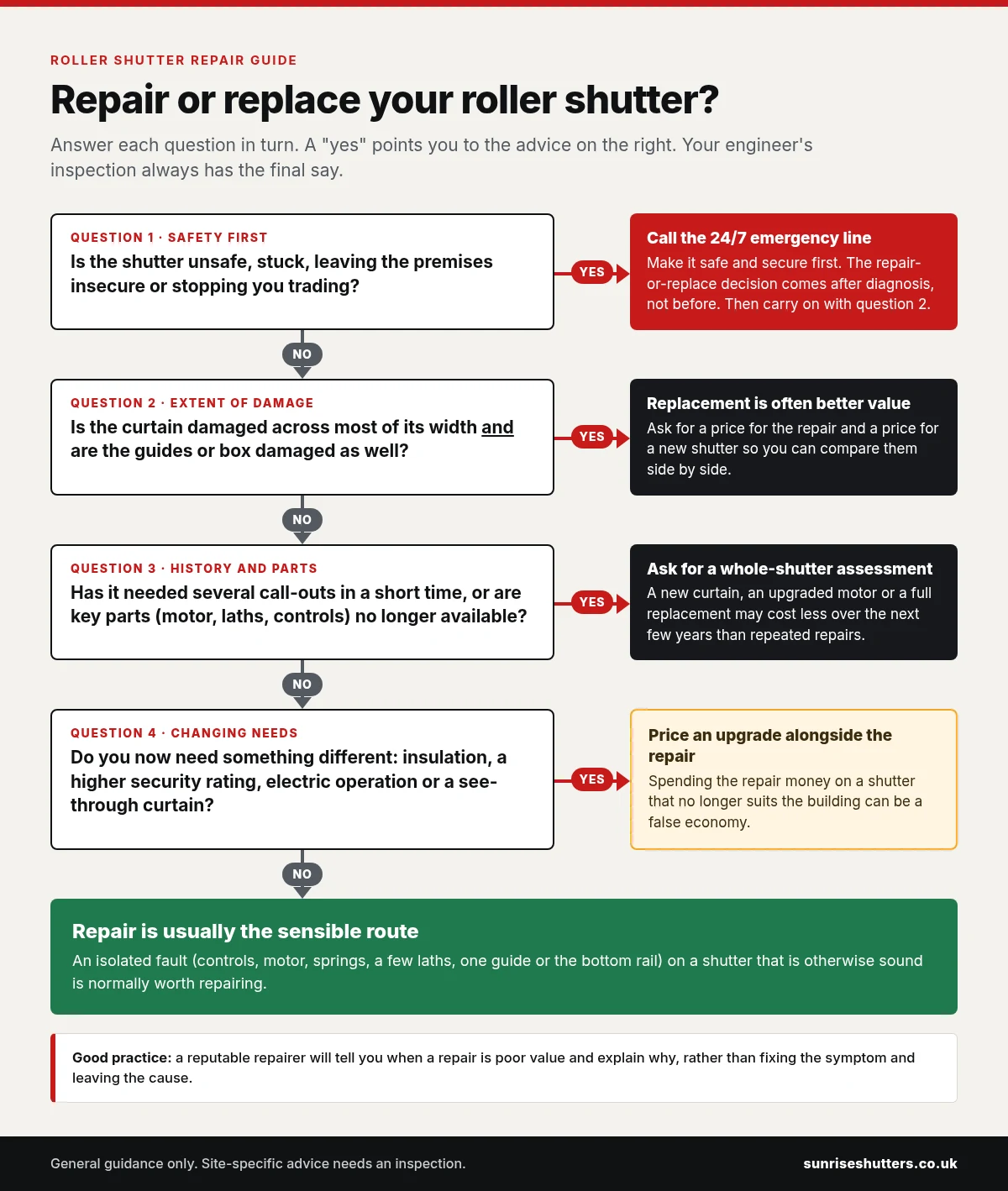
A good repairer should be willing to tell you when a repair is poor value, and to explain why. If you are weighing up a new shutter, our guide to roller shutter installation cost explains what affects the price of a new commercial shutter, so you can compare the two properly.
How to get an accurate repair quote
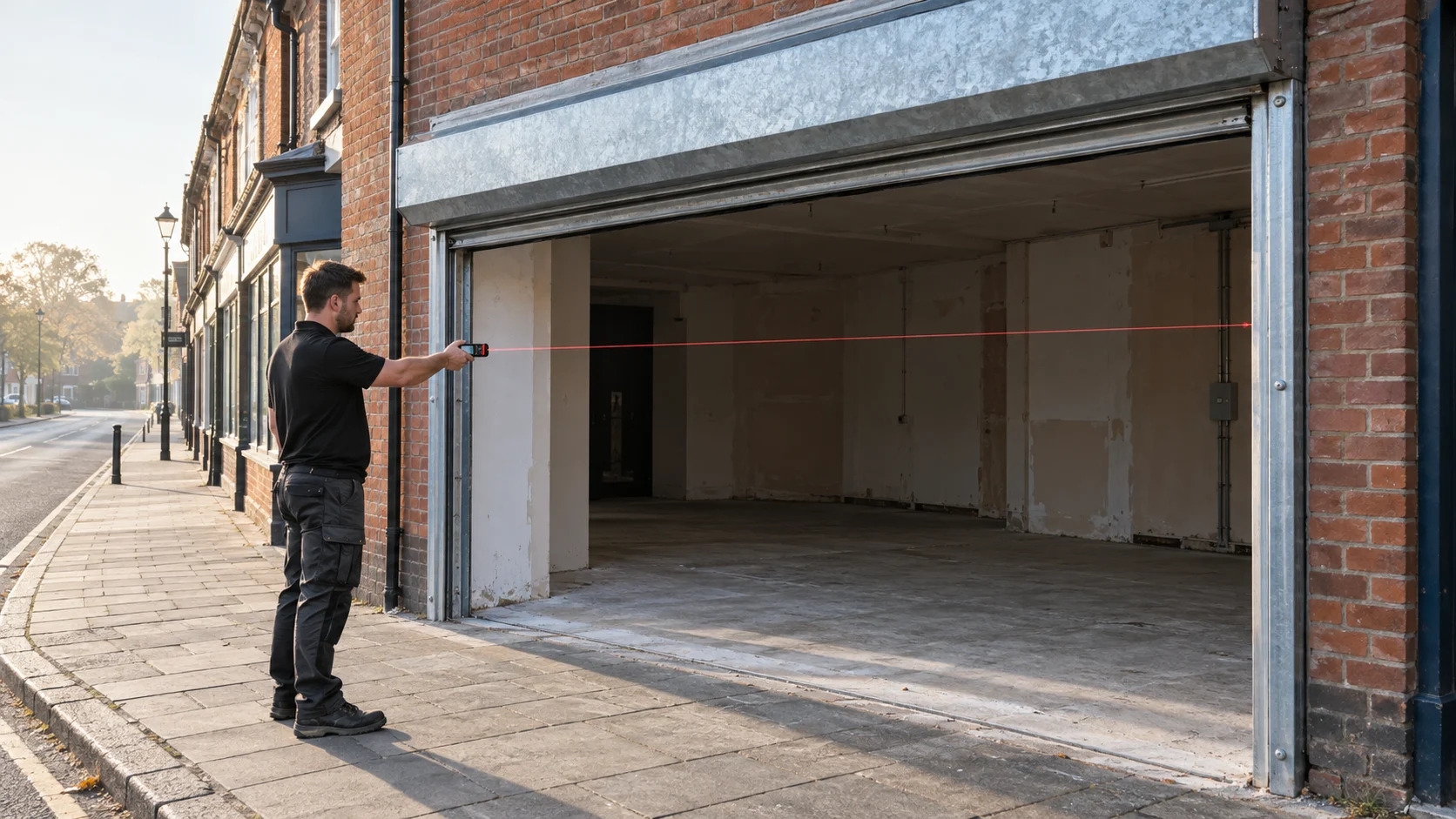
The more the engineer knows before the visit, the more likely the repair can be done first time. When you call, have these details ready:
- ☐ Site address and postcode, and an on-site contact who can give access
- ☐ Type of shutter: shopfront, internal, warehouse, loading bay or garage
- ☐ Manual or electric, and how it is operated: remote, key switch, push button, hand chain or winding handle
- ☐ What it is doing: stuck open, stuck closed, stopping part way, running crooked, a new noise, or not responding
- ☐ Any recent event: impact, attempted break-in, power cut, storm or heavy rain
- ☐ Photos or a short video of the shutter, guides and bottom rail, taken from a safe distance
- ☐ Approximate size of the opening and the height of the shutter box
- ☐ Any labels on the motor or control box showing the make or model, and whether the shutter was fitted by another company
- ☐ Access details: parking, restricted hours, a canopy, stock in the way or a busy pavement
Be wary of a firm phone price for a fault nobody has seen. A fair repairer can explain how a visit is charged, but the final cost depends on what is found. You can send the details through our contact page or call the team on the numbers below.

Not an emergency? Book a planned repair
If your shutter still opens, closes and locks but is noisy, slow or unreliable, call our installation and service line or send us the details and a photo. We will explain the likely next step before any work starts.
How to compare repair quotes
Make sure you are comparing like with like. The cheapest quote is poor value if it only treats the symptom and the shutter fails again weeks later.
| Check | A good quote | A warning sign |
|---|---|---|
| The fault | Says what was found and what caused it | Only says “repair shutter” |
| Parts | Lists the parts, matched to your shutter’s size and weight | No parts listed, or a generic motor for every door |
| Temporary or permanent | Clearly separates make-safe work from the permanent repair | A temporary fix presented as finished |
| Safety devices | Includes checking and testing them before handover | Offers to disconnect a safety edge or photocells to “get it working” |
| Testing | The shutter is run through a full operating cycle before the engineer leaves | No mention of testing |
| Guarantee | States what guarantee applies to parts and workmanship | Nothing in writing |
| Price basis | Makes clear what is included and whether VAT is included | Extras that only appear on the invoice |
★★★★★
“We’re really happy with the service from Sunrise Shopfronts! They always do a fantastic job and fixed our shutter very quickly. Their service is reliable, efficient, and professional. We really appreciate their quick response and excellent workmanship. Highly recommend Sunrise Shopfronts to anyone looking for a reliable and trustworthy service!”
Paramjot Dhaliwal, Google review
Questions to ask your engineer
A good engineer will be happy to answer these, and the answers tell you a lot about the repair you are paying for.
- What caused the fault? Fixing the cause, not only the symptom, is what stops it happening again.
- Is this a temporary or a permanent repair? And if temporary, what happens next and when?
- Are the parts matched to this shutter? Particularly important for motors and springs, which must suit the curtain’s weight.
- Did you find anything else that is wearing? Better to plan for it than meet it in an emergency.
- Are the safety devices working? Ask to see the safety edge and photocells tested.
- Is it worth repairing, or should I consider replacing it? An honest engineer will give you a straight answer and the reasons.
- Can I have a written report? Useful for your maintenance records, your landlord and your insurer.
★★★★★
“Great company! The chap who came out to do the quote was really knowledgeable and helped guide us towards the right solution for our premises. Once we’d decided to go ahead, three lads turned up literally a week later and got everything fitted. Really happy with the whole service from start to finish. Would definitely recommend!”
Natalie Clayton, Google review
How to keep future repair costs down
You cannot prevent every fault, but these low-cost habits make faults less frequent and less serious:
- Keep the guides and the drop zone clear. Stock, bins, A-boards and debris under the shutter are a common cause of damaged bottom rails.
- Never lean on or push the curtain while it is moving, and never walk under a moving shutter.
- Report changes early: new noises, slower operation or a shutter that catches at one point. Early repairs are smaller repairs.
- Have powered shutters serviced at intervals that suit how often they are used and the environment they work in. Our simple monthly roller shutter maintenance checklist covers the checks your team can safely do between visits.
- Protect vulnerable openings. On yards and loading bays, bollards and guide protectors help stop vehicles hitting the guides.
- Keep records. Dates of faults, repairs and services help an engineer spot patterns and help you decide when replacement makes sense.

A planned service checks condition and operation and can pick up developing wear, although no maintenance can guarantee a fault will never happen. Our roller shutter maintenance service page explains how we plan visits around how a shutter is actually used, and our upcoming roller shutter servicing guide sets out what a service includes and how often you need one. For a closer look at individual components, see our guide to roller shutter parts explained.
Your legal duties as a business
If your shutter is part of a workplace, repairs are not only about cost. In Great Britain, the Workplace (Health, Safety and Welfare) Regulations 1992, regulation 18, requires that doors and gates are suitably constructed and fitted with any necessary safety devices. It specifically says upward-opening doors must have a device to prevent them falling back, and powered doors must have suitable and effective features to prevent them trapping anyone. Regulation 5 requires workplace equipment, devices and systems covered by the regulations to be maintained in an efficient state, in efficient working order and in good repair, with a suitable system of maintenance where appropriate. The HSE’s Approved Code of Practice and guidance (L24) explains these duties in more detail. Northern Ireland has its own equivalent regulations.
So a faulty safety edge or a shutter that might fall back should not wait for a convenient moment. Fire shutters have their own testing requirements, covered in our guide to fire shutter servicing. If you are unsure what applies to your site, take advice from your health and safety adviser.
Roller shutter repairs across the West Midlands and the UK
Our engineers repair manual and powered shutters on shops, warehouses, factories and trade units. We are based in West Bromwich, with priority response across Birmingham, West Bromwich and the West Midlands, including roller shutter repairs in Birmingham and roller shutter repairs in Wolverhampton. Our repair teams also work further afield; for other areas, call and we will confirm attendance for your site. You can read more about how we diagnose and fix faults on our main roller shutter repairs page.
Frequently asked questions
How much does a roller shutter repair cost?
It depends on the fault, the type and size of shutter, the parts needed, access, and whether the visit is planned or an emergency. That is why we confirm the repair after inspection rather than quoting blind. Sharing the symptoms and a photo when you get in touch helps us advise on the likely next step.
Why can’t you give me an exact repair price over the phone?
Because the same symptom can have several causes. A shutter that will not close could have a control fault, a drifted limit, a bent guide or a failing motor. Photos help, but an accurate price needs an inspection.
Is an emergency shutter repair always more expensive?
Out-of-hours attendance generally costs more than a planned visit in normal working hours. If the shutter is stuck open, the premises are insecure or you cannot trade, that cost is usually justified. If the shutter still works but is noisy or slow, book a planned repair instead.
How long does a roller shutter repair take?
It depends on the fault. The engineer diagnoses the problem on the first visit. Many faults are fixed there and then; if parts are needed, the shutter is made secure and a return visit is agreed to complete the repair.
Can I repair my roller shutter myself?
Simple checks are fine: power, isolator, handset batteries, a clear opening and clean photocells. Anything involving springs, the motor, the control panel, the barrel or working at height should be left to a trained engineer. Shutters are heavy, springs store a lot of energy and controls carry mains voltage.
Will my insurance cover a shutter repair after a break-in?
That depends entirely on your policy. Report the break-in to the police, and keep photos, the crime reference number and the engineer’s report and invoice, as insurers usually ask for them. If your insurer has requirements about the shutter’s security rating, ask them to put those requirements in writing so the repair or replacement can meet them.
Need a shutter looked at?
Tell us what the shutter is doing and, if you can, send a photo. We will explain the likely next step before any work starts, and we will always tell you plainly whether repair or replacement makes more sense.
- Emergency repair line (24/7): 07931 104160
- Installation and service line: 07931 104162
