
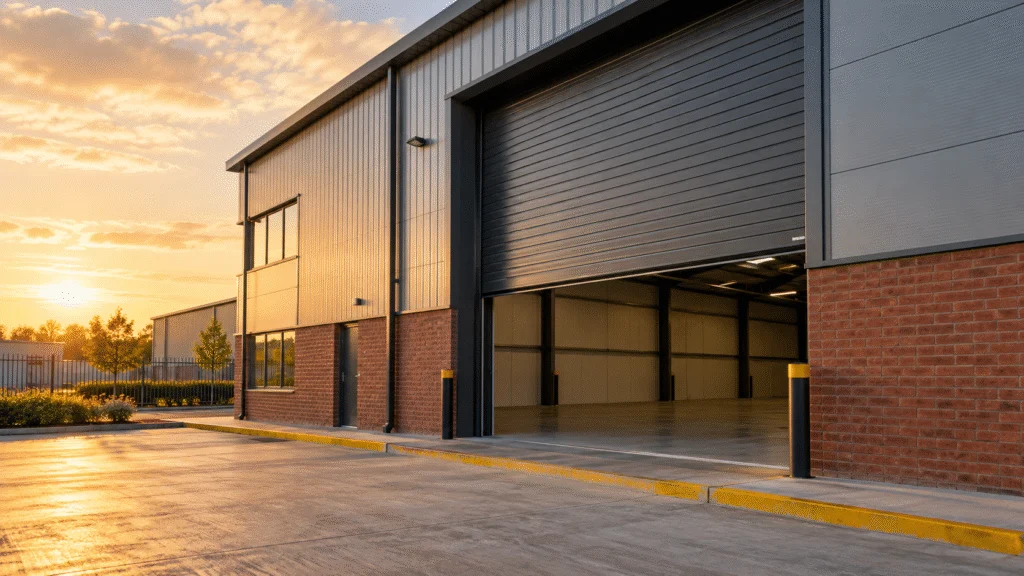
When business owners ask about roller shutter installation cost, they usually want a single figure. In reality, two shutters that look similar from the street can be priced very differently, because the price follows the opening, the risk and the way the shutter will be used every day.
This guide explains the main factors behind the price of a commercial roller shutter. Consequently, you can compare quotes on the same terms, ask the right questions and avoid paying twice for a shutter that was never right for the premises in the first place.
Roller shutter installation cost: the quick answer
There is no fixed price per shutter. Instead, a reliable quote reflects a combination of factors:
- the width and height of the opening
- the type of lath or curtain
- manual or electric operation, and the motor size
- the level of security required
- the finish and colour
- how the shutter is fixed to the building
- access, working at height and site conditions
- safety devices and controls
- removal of an old shutter
- ongoing servicing and aftercare
In practice, the cheapest quote is rarely the lowest-cost option over the life of the shutter. A shutter that fits badly, struggles with daily use or falls short of your insurer’s expectations usually costs more in the long run.
Size and shape of the opening
Size is the most obvious factor. A wider and taller opening needs more curtain, heavier guides, a larger barrel and often a more powerful motor. Therefore, the cost does not rise in a straight line. A shutter twice as wide may need a different specification altogether.
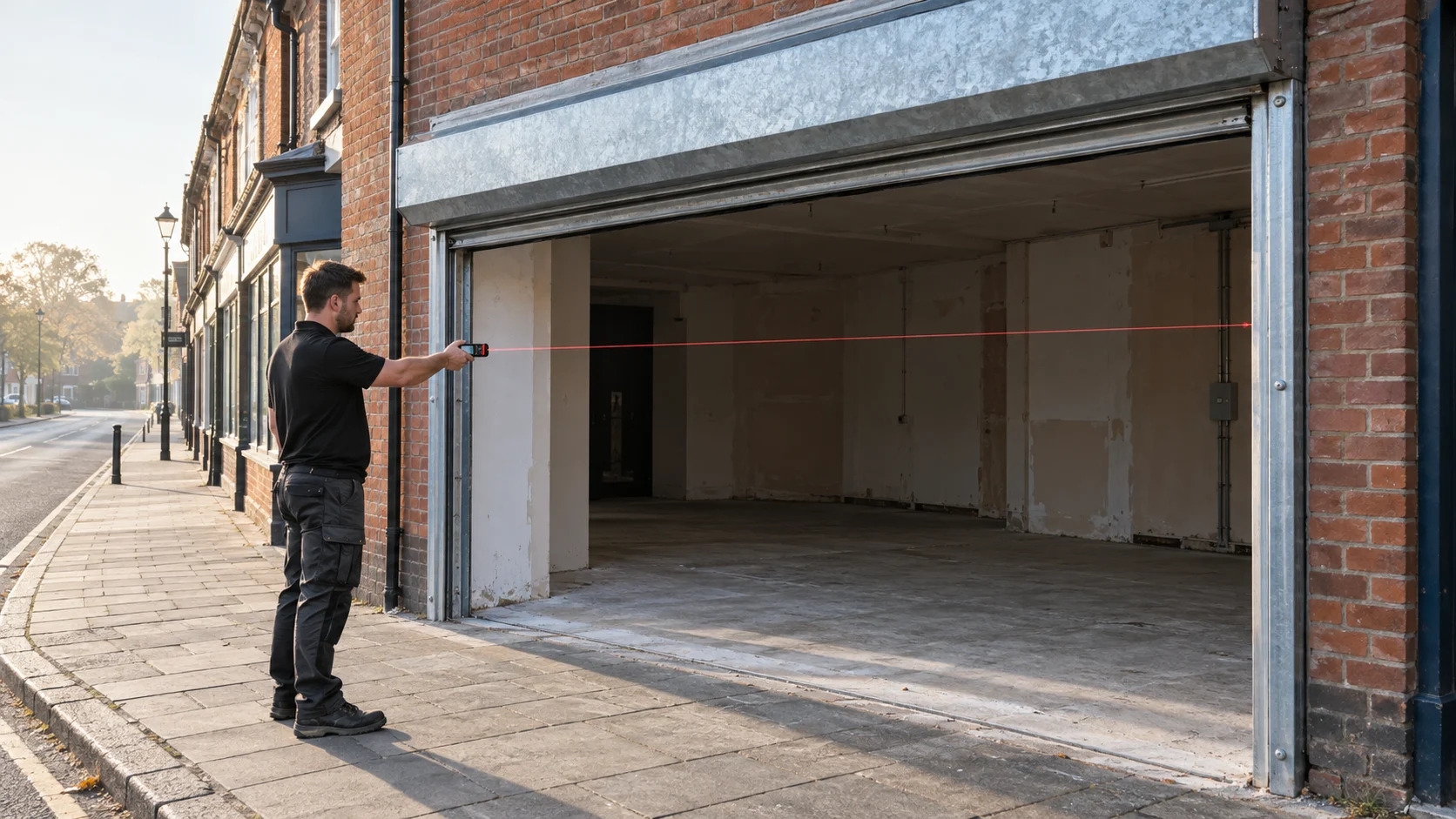
Shape and condition matter too. Older buildings across Birmingham and the wider West Midlands often have openings that are slightly out of square, uneven lintels or brickwork that has moved over time. As a result, a standard-size product rarely fits cleanly.
This is why we survey every opening before manufacture. Our made-to-measure roller shutters are built in our own workshop to the measured opening, rather than adjusted from a stock size with packing pieces and trims.
The type of lath or curtain
The curtain is the part people see, and it has a large influence on price.
Solid laths
Solid steel or aluminium laths give full screening and a strong physical barrier. They suit warehouses, trade counters and shops that do not need visibility after closing.
Perforated and punched laths
Perforated or punched laths allow some light and visibility through the curtain. Consequently, they can suit retailers who want window displays to remain partly visible at night. They may also suit frontages where the local council prefers a more open appearance.
Insulated laths
Insulated laths add a foam-filled profile that helps with heat retention and noise. They are often chosen for workshops, warehouses and units where staff work close to the door.
Each option involves different materials and manufacturing time. Therefore, ask every supplier to state the lath type clearly on the quote, so you are comparing like for like.
Manual or electric operation
Manual shutters are simpler and usually cost less to install. However, they become impractical on larger or heavier openings, and on doors used many times a day.
Electric shutters cost more upfront because of the motor, controls and electrical work. In return, they are easier for staff to use, more consistent and often safer for large openings. In addition, the motor must be sized correctly for the curtain. An underpowered motor works harder, wears faster and may need early replacement.
When comparing quotes, check:
- the motor type and whether it suits the shutter size
- the control method, such as key switch, push button or remote
- whether a manual override is included for power cuts
- who carries out the electrical connection
Security level and insurance requirements
A shutter that only needs to deter casual vandalism is specified differently from one protecting high-value stock. Heavier gauge laths, stronger guides, locking and anti-lift features all add to the price.
Your insurer may also set expectations for certain openings. Therefore, check your policy wording or speak to your broker before you request quotes. It is much easier to specify the right shutter at the start than to upgrade after a claim has been questioned.
If a supplier describes a shutter as security rated, ask which standard it has been tested to and request the certificate. Clear answers help you compare quotes properly.
Finish, colour and appearance
Galvanised steel is practical and cost-effective. However, many businesses want a powder-coated finish that matches their branding, signage or shopfront.
Colour matching can add cost, but it also changes how the frontage looks every evening. Because we manufacture to order, we can specify colour and finish around your existing branding. For multi-site businesses, that consistency is often worth the small extra investment.
The position of the shutter box also affects appearance and price. A box concealed behind a fascia or fitted internally looks tidier, but it may involve more preparation work.
Fixing, access and site conditions
The building itself influences installation time. For example, fixing into solid brickwork is simpler than fixing into cladding, steel frames or a weak lintel that needs extra support.
Access matters as well. In addition, the following can all add time and cost:
- high openings that need scaffold towers or powered access
- busy high streets with limited parking or loading
- restricted working hours in shopping centres or retail parks
- awkward internal space for the barrel and motor
- old shutters that must be removed and disposed of first
A proper site survey identifies these issues before the quote. Consequently, you are less likely to face surprise extras on installation day.
Safety devices and compliance
Powered shutters must operate safely, particularly where staff or members of the public pass close to the opening. HSE identifies BS EN 12453 and BS EN 12604 as key standards for powered and mechanical door safety. Therefore, the specification may need safety edges, photocells or other protective devices depending on how the shutter is used.
If the opening sits on a fire escape route or forms part of fire compartmentation, the requirements change again. In those situations, speak to your fire risk assessor before finalising the design, and consider whether you need a fire shutter instead of a standard security shutter.
Aftercare and servicing
The price of installation is only part of the long-term cost. Commercial shutters need routine servicing to stay safe and reliable, and HSE guidance expects powered doors to be kept in good working order.
Ask every supplier what maintenance and servicing they offer after installation, and what happens if the shutter fails out of hours. We provide a 24/7 emergency repair service, and if a full repair is not possible immediately, we make the premises secure and return during business hours to complete the work.
How to compare roller shutter quotes properly
Before accepting a quote, make sure each one answers the same questions:
- Has the opening been surveyed, or is the price based on your own measurements?
- What lath type, gauge and finish are included?
- Is the shutter manual or electric, and what motor and controls are specified?
- Which safety devices are included?
- Does the specification meet your insurer’s requirements?
- Are electrical work, removal of the old shutter and making good included?
- Who manufactures the shutter, and who installs it?
- What servicing and emergency support is available afterwards?
If a supplier cannot answer clearly, treat the low price with caution. In practice, the clearest quotes come from companies that manage the whole job themselves. Our supply and installation service keeps survey, manufacture and fitting with one team, so responsibility stays in one place.
Frequently asked questions
Why do roller shutter quotes vary so much?
Quotes often include different specifications. One may include a heavier lath, a correctly sized motor, safety devices and removal of the old shutter, while another leaves those out. Therefore, compare the details rather than the total alone.
Are electric roller shutters worth the extra cost?
For larger openings and shutters used every day, they usually are. Electric operation is easier for staff and more consistent. However, a small, rarely used opening may work perfectly well with a manual shutter.
Does a made-to-measure shutter cost more?
Bespoke manufacture can cost more upfront than an off-the-shelf product. However, it avoids poor fit, extra trims and early wear, which often make a cheaper shutter more expensive over its lifetime.
Can I get a price without a site survey?
You may get a guide figure, but a reliable final price needs a survey. The condition of the opening, fixings, access and electrical supply all affect the work.
Does the cost include servicing?
Not usually. Installation and servicing are normally priced separately, so ask what aftercare is available before you commit.
Final thoughts
The real roller shutter installation cost depends on the opening, the specification and the way your business will use the shutter every day. Size, lath type, motor, security level, finish and site conditions all play a part, and so does the aftercare that follows.
The best approach is to start with a site survey and a clear brief. If you are planning roller shutters in Birmingham or anywhere across the West Midlands, Sunrise Shopfronts & Shutters can survey the opening, manufacture the shutter in our own workshop and install it with our own team.
Speak to the team: call 07931 104162 for installation and servicing, 07931 104160 for emergencies, or email info@sunriseshutters.co.uk.
