
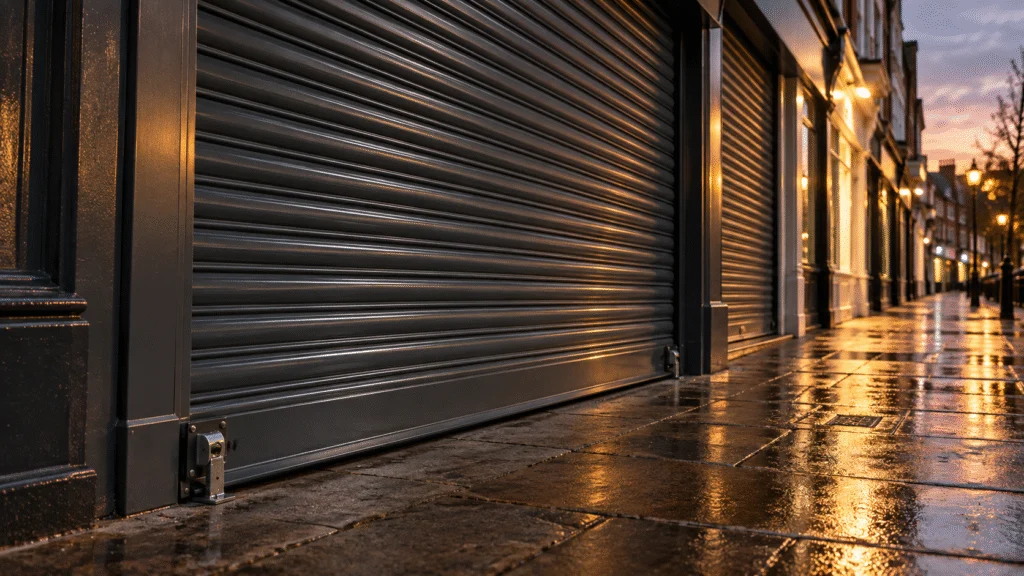
Most roller shutters look strong when they are closed. However, appearance tells you very little about how long a shutter will resist a determined attack. That is where roller shutter security ratings come in. They give businesses, insurers and specifiers a common way to compare products that would otherwise look almost identical.
This guide explains the main security standards used for shutters in the UK, what the ratings mean in practice and how they connect to your insurance. Consequently, you can ask better questions before you buy, upgrade or replace a shutter.
Roller shutter security ratings: the quick answer
A security rating shows that a product has been independently tested against a defined attack method for a set period. In other words, it measures resistance, not appearance.
The schemes you are most likely to see include:
- LPS 1175, issued by the Loss Prevention Certification Board (LPCB)
- EN 1627, the European standard for burglar resistance of doors, windows, shutters and grilles
- STS 202, another recognised security test standard for doors and shutters
- Secured by Design, the police-backed initiative that recognises products meeting suitable security standards
Not every shutter needs a high rating. Therefore, the right level depends on the premises, the stock and the risk in your area, as well as what your insurer expects.
Why security ratings matter
They replace vague claims with evidence
Words such as “heavy duty” or “high security” have no fixed meaning. A tested rating, on the other hand, tells you that a product has been attacked under controlled conditions and resisted for a defined time.
As a result, you can compare suppliers on the same terms. If one shutter has a certified rating and another simply claims to be strong, you know which claim has been tested.
They help match protection to risk
A florist and a mobile phone retailer face very different risks. Similarly, a warehouse on a busy industrial estate in Wolverhampton may need different protection from a quiet office unit in Solihull.
Security ratings help you choose a level that fits the real risk, rather than overspending on an opening that does not need it or under-protecting one that does.
They support conversations with your insurer
Insurers often look at how a property is protected when they assess cover. A recognised rating gives your broker something clear to point to, instead of a general description.
How LPS 1175 ratings work
LPS 1175 is one of the most widely referenced security standards for shutters, grilles and doors in the UK. Products are tested against attack and given a rating by the certification body. Ratings differ between issues of the standard, so if a supplier quotes one, ask what it means and how it compares with the level your insurer asks for.
Always ask for the certificate and check that it covers the exact product being offered, including its size range and components. A rating applies to the tested system, not to a similar-looking shutter.
Other standards you may come across
EN 1627
EN 1627 classifies burglar resistance using RC classes. Higher classes reflect greater resistance to attack. You will see it more often on doorsets and windows, but it also covers shutters and grilles.
STS 202
STS 202 is another independent test standard used for security doors and shutters. Some manufacturers test to STS 202 instead of, or as well as, LPS 1175.
Secured by Design
Secured by Design is the official police security initiative. Products that meet its requirements can carry Police Preferred Specification status. For some developments and higher-risk premises, this recognition can be useful evidence when security is reviewed.
What insurers may expect from your shutter
Insurance requirements vary between policies, so there is no single rule. However, some commercial policies set out expectations for how certain openings are protected, particularly for higher-risk trades or stock.
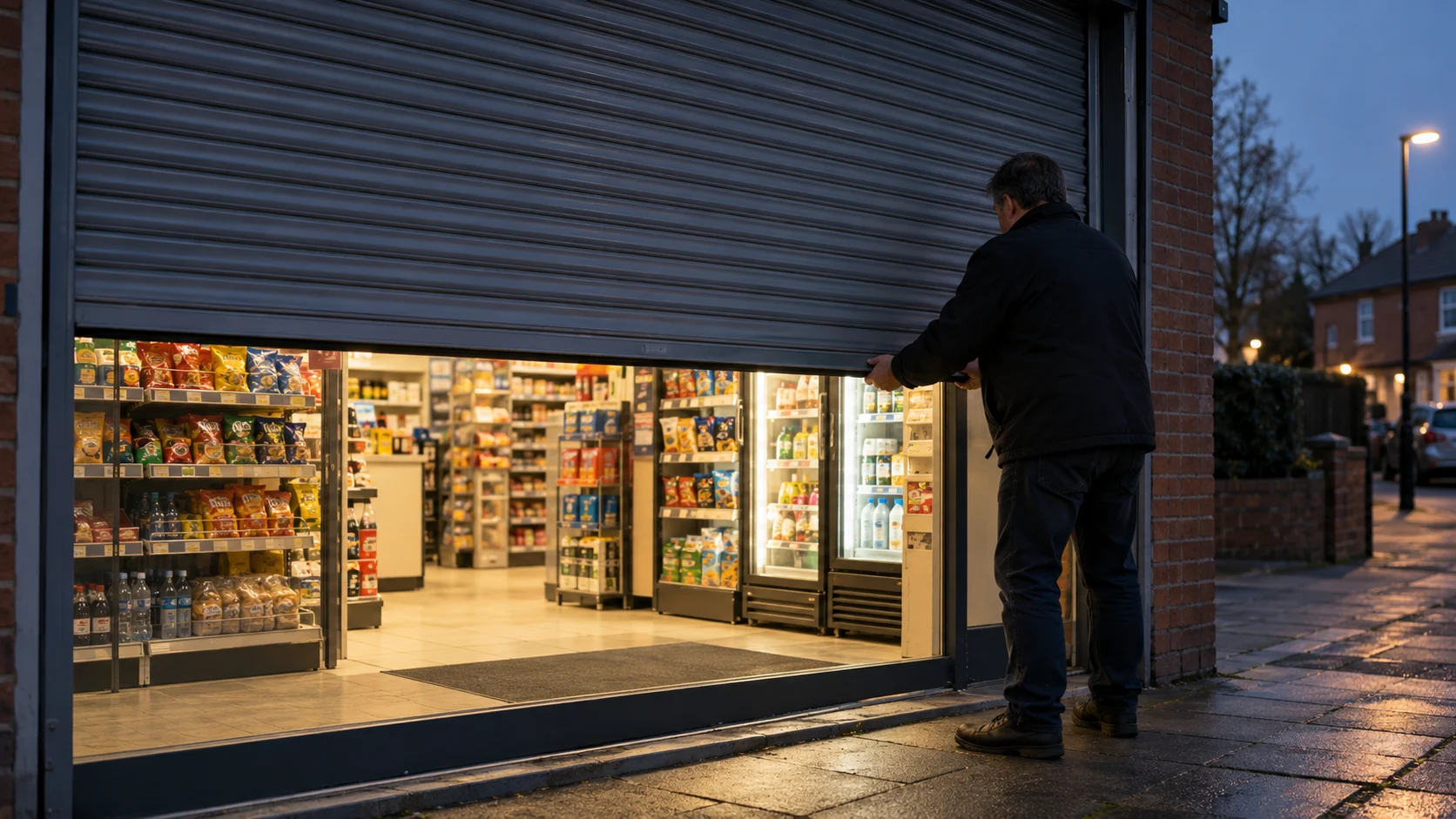
In practice, check your policy for:
- any minimum security standard for shutters, grilles or doors
- conditions that the shutter must be closed and locked when the premises are unattended
- requirements for alarms, keyholding or monitoring
- conditions linked to the repair of damaged security measures
If your policy contains security conditions, a shutter that falls short can cause problems at the worst possible moment, which is when you make a claim. Therefore, speak to your broker before you choose a specification, not after the installation.
Similarly, if your shutter is damaged, prompt repair matters. A shutter that no longer locks properly may not meet the conditions of your cover. Our emergency shutter repairs service operates 24/7, and if a full repair is not possible straight away, we make the premises secure and return during business hours to complete the work.
Ratings are only one part of a secure shutter
A tested product still needs to be specified, fitted and maintained correctly. Consequently, the following details matter as much as the rating itself:
- Fit: a shutter built to the measured opening avoids gaps and weak points
- Fixings: guides must be secured into sound structure, not weak cladding or loose brickwork
- Locking: bottom rail locks and anti-lift features should suit the opening
- Controls: key switches and control boxes should not be easy to tamper with
- Maintenance: worn guides, damaged laths or faulty locks reduce resistance over time
This is why we survey every opening and manufacture our shop roller shutters in-house. Measurement, manufacture and installation stay with one team, so the finished shutter suits the opening it protects.
Choosing the right level for your premises
Retail and high street shops
Many shops need a balance of security, appearance and daily usability. Where window displays matter, an internal security grille behind the glass may suit better than a solid external shutter. However, high-value retailers may need a higher tested level of protection across the whole frontage.
Warehouses and trade units
Large openings, yard access and stock held overnight often justify heavier protection. In addition, vehicle impact and forced entry at loading bays are common risks, so the guides and bottom rail deserve close attention.
Back doors and side entrances
Intruders often target the least visible entrance. Therefore, review rear doors, fire exits and stockroom entrances alongside the main frontage. Our steel doors are designed to protect these openings, and the same questions about testing and certification apply.
Questions to ask before you buy
Before accepting a quote, ask:
- Has the shutter been independently tested, and to which standard?
- Can I see the certificate, and does it cover this exact product and size?
- Does the specification meet my insurer’s requirements?
- How is the shutter fixed to the building?
- What locking and anti-lift features are included?
- Who manufactures and installs it?
- What maintenance and emergency support is available?
Clear answers show a supplier who understands both the product and the risk.
Frequently asked questions
Do all roller shutters have a security rating?
No. Many shutters are well built but have not been independently tested. A rating only applies where the product has been tested and certified to a recognised standard.
Does my insurer require a rated shutter?
It depends on your policy. Some insurers set minimum security standards for certain openings or trades, while others do not. Check your policy wording or ask your broker.
Is a higher rating always better?
Not necessarily. A higher rating usually means a heavier and more expensive product. Therefore, the best choice is the level that matches the actual risk to the premises.
Can a damaged rated shutter still meet my insurance conditions?
A damaged shutter may not provide the protection it was tested to give. Therefore, arrange a prompt repair and keep a record of the work for your insurer.
Final thoughts
Roller shutter security ratings turn general claims into tested evidence. LPS 1175, EN 1627, STS 202 and Secured by Design each help you understand how a shutter performs under attack, while your insurance policy tells you what level of protection your cover may depend on.
The right shutter starts with the real risk, a clear conversation with your broker and a proper survey. If you are reviewing security for premises across Birmingham or the wider West Midlands, Sunrise Shopfronts & Shutters can survey the opening and design, manufacture and install a shutter that suits the way your business works.
Speak to the team: call 07931 104162 for installation and servicing, 07931 104160 for emergencies, or email info@sunriseshutters.co.uk.
