
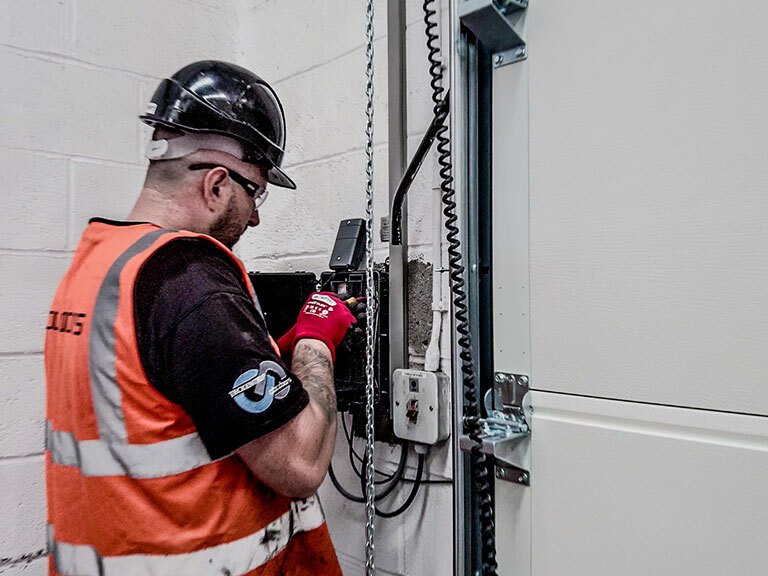
A roller shutter motor replacement is rarely about convenience alone. More often, it becomes necessary because the shutter is slowing down, hesitating under load, or becoming unpredictable in daily use. HSE guidance on powered systems notes that much of its advice for powered gates also applies to shutters, and that powered systems need regular checks and maintenance to remain safe in use.
For both homeowners and business owners, the key point is simple. A tired motor does not just affect speed. It can also affect safe stopping, limit accuracy, security when closed, and the strain placed on the rest of the shutter system. As a result, leaving symptoms too long can turn a manageable motor repair into a larger job involving controls, limits, guides or the curtain itself.
Quick answer: when is it time to replace a shutter motor?
In practice, it is usually time to seriously assess roller shutter motor replacement when the shutter becomes consistently slow, stalls part way, overheats, trips out, or starts making new humming, grinding or clattering noises. Likewise, if the shutter no longer stops cleanly at the top or bottom, or the motor struggles with the curtain weight, the system needs a proper diagnosis rather than repeated resets.
Why the motor matters more than most people think
The motor is only one part of the assembly, but it drives the whole opening cycle. Therefore, when it weakens, the symptoms often show up elsewhere first. You might notice uneven travel, delayed response from the controls, or a shutter that sounds rough even though the real problem sits in the drive, brake or limit arrangement.
That is why a motor change should never be treated as a casual swap. Manufacturer guidance makes clear that shutter motors must match the size, weight and operating characteristics of the shutter, while industry best-practice guidance for industrial and garage doors also covers shopfront shutters over pedestrian accesses. In other words, correct motor selection matters just as much as fitting quality.
Signs your shutter motor is reaching the end of the road
Slow operation that keeps getting worse
A shutter that used to open crisply but now crawls is sending a useful warning. Sometimes that slow movement points to guide friction or poor alignment. However, it can also mean the motor is losing efficiency or working harder than it should for the load it is carrying.
Slow operation becomes more serious when it is consistent. If the shutter drags every morning, pauses under load, or feels weaker in cold or damp conditions, the motor may be struggling against load, wear or an incorrect sizing decision. HSE also notes that outdoor powered systems face weather-related risks, including water ingress and electrical problems, which can affect safe operation.
Stalling or stopping halfway
Stalling is one of the clearest escalation points. A shutter that stops halfway and only continues after repeated button presses is no longer performing reliably, and repeated cycling can make the fault worse.
Official motor documentation notes that thermal cut-outs can activate when the motor overheats, and that a motor which struggles to lift the shutter may be dealing with a size and weight mismatch. Because of that, stalling is not just an inconvenience. It can be a sign that the motor is overloaded, incorrectly matched, or nearing failure.
New noise, humming, grinding or clattering
Noise is often the symptom people ignore longest. In practice, that is a mistake, because new sounds usually mean something has changed in the system. The motor may be labouring, the brake may not be releasing cleanly, or worn components may be creating resistance that the motor can no longer mask.
Not every noise means you need a new motor that day. Sometimes a service visit, adjustment or targeted motor repair is enough. However, if the noise arrives alongside slow travel, jerky starts, heat, or inconsistent stopping, replacement or motor upgrade moves much higher up the list.
Inconsistent limits and unreliable stopping
If the shutter no longer stops where it should, the problem may sit in the limit setting, control arrangement or the motor head itself. Manufacturer instructions state that limit switches must be set after the motor is installed, which is one reason poor installation work often shows up later as erratic stopping or over-travel.
For homeowners, this might mean the shutter stops short of the floor or strains at the top. For businesses, it can also become a security issue if the shutter will not fully close or repeatedly needs intervention at opening and closing time.
Motor repair or motor upgrade, which is the smarter move?
A good engineer will not jump straight to replacement. If the problem is isolated, for example a failed switch, damaged control input, worn capacitor, loose connection or incorrect setting, a motor repair may be the most sensible route. That is especially true when the shutter is otherwise well balanced and the motor is still correctly matched to the curtain.
On the other hand, repeated overheating, recurring stall faults, worn braking, obsolete parts or an underpowered unit usually point towards roller shutter motor replacement instead. Similarly, if the shutter has changed since original installation, perhaps through heavier slats, higher use, or newer control expectations, a motor upgrade may be the better long-term answer. Manufacturer guidance specifically warns that motors must be compatible with the shutter’s size and weight, so a like-for-like replacement is not always the right engineering decision.
Why a like-for-like motor swap is not always enough
This is where experience matters. A proper motor upgrade should review the curtain weight, barrel size, duty level, limit arrangement, safety inputs and control method before any new unit is fitted. Otherwise, you risk replacing a failed motor with another motor that inherits the same overload conditions.
There is also a compliance angle, particularly on commercial sites. HSE states that substantial modifications may require re-assessment, and that anyone working on the system must leave it in a safe condition. In addition, HSE says commercial owners and occupiers must ensure powered doors and gates are safe, regularly inspected and maintained, sometimes with help from a competent contractor.
That is why the final stage matters as much as the fitting itself. Manufacturer documentation for industrial door automation says testing and commissioning should be carried out by skilled, qualified personnel, and that the owner should receive use information and a maintenance plan. In practical terms, a proper motor replacement should end with checks, testing, handover and clear advice, not just a new motor bolted in place.
What homeowners and business owners should do when symptoms appear
If your shutter is slow, noisy or stalling, resist the urge to keep trying it. Repeated cycles can trip thermal protection, increase wear and make diagnosis harder. Instead, note exactly what the shutter is doing, when the problem occurs, and whether it happens in both directions.
Next, check only the obvious external points. Look for debris in the guides, damage to the curtain, or signs of impact. Do not adjust limits, open control panels or force manual overrides unless a qualified engineer tells you to do so, because powered systems can present electrical and mechanical hazards if worked on incorrectly.
For commercial premises, the legal duty is clearer. HSE says owners and occupiers must keep powered systems safe and maintained. For domestic owners, workplace law does not normally apply to privately owned household systems, but HSE still notes that householders may be liable for harm or damage caused by an unsafe installation.
What a specialist motor assessment should include
A specialist should assess the whole shutter, not just the motor label. That means checking load, travel, balance, guide condition, control inputs, power supply, stopping positions and any fitted safety devices. Because many shutter faults overlap, this wider approach is what separates accurate diagnosis from guesswork.
This is also where a firm like Sunrise Shutters naturally fits the conversation. Sunrise states that it manufactures in-house, provides ongoing maintenance and repairs, and offers 24/7 emergency attendance, including making premises secure if a full repair cannot be completed immediately. That kind of end-to-end approach matters when deciding whether a failing motor needs adjustment, repair or a full upgrade.
Frequently asked questions
How do I know if it is the motor and not the shutter itself?
You only know after a proper inspection. Slow travel, stalling and noise can come from the motor, but they can also come from guide friction, curtain damage, poor balance or faulty controls. Therefore, a specialist should always assess the full system before recommending roller shutter motor replacement.
Is a motor upgrade worth it for a domestic shutter or garage door?
Usually, yes, if the existing motor is unreliable, underpowered or outdated for the way you now use the shutter. Homeowners often benefit from quieter operation, more reliable stopping and better convenience, while still needing the system left safe and correctly adjusted after the work. HSE notes that although domestic householders fall outside workplace law for private systems, they may still face liability if harm or damage results from an unsafe installation.
Can a business keep using a slow shutter until it fails completely?
That is rarely a wise decision. HSE says powered systems in commercial settings must be maintained for safety and inspected regularly, and worn components can fail severely if ignored. From an operational point of view, that means a slow shutter today can become a security failure, access problem or emergency call-out tomorrow.
Final thoughts
The best time to deal with a failing shutter motor is before it becomes an emergency. If your shutter is slow, stalling or making new noise, do not treat it as normal wear and tear. Treat it as a sign to review the system properly and decide whether motor repair, motor upgrade or full roller shutter motor replacement is the most reliable route.
For homeowners and business owners alike, the right specialist will look beyond the motor itself, test the full setup and leave the shutter safe, correctly adjusted and ready for regular use. That is the standard a specialist service such as Sunrise Shutters is built around, and it is the standard worth insisting on whenever a shutter starts to struggle.