
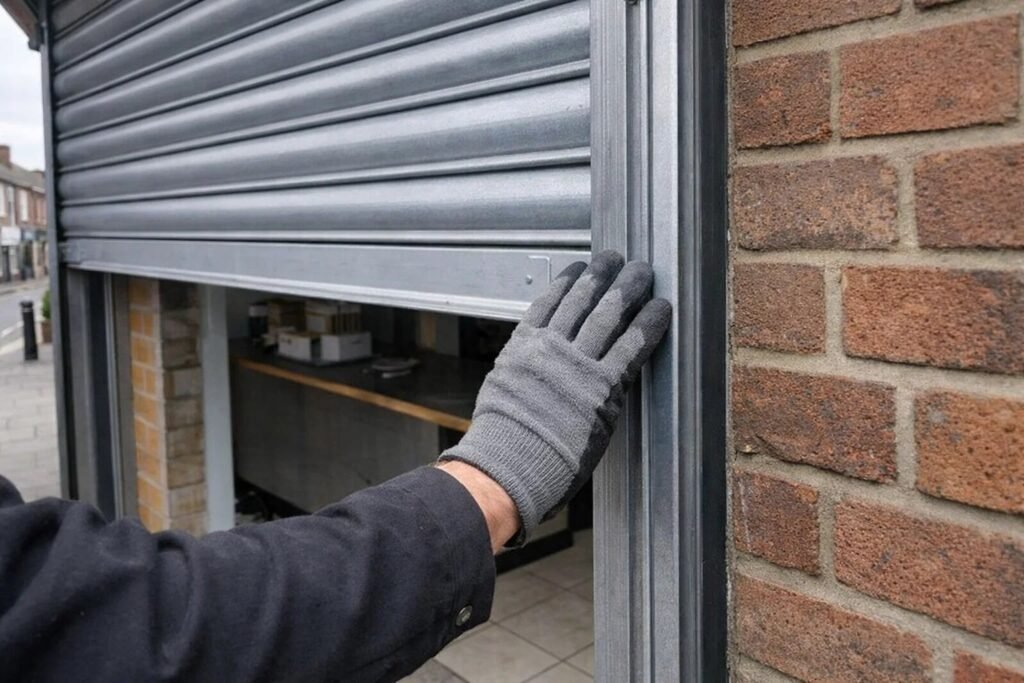
An emergency repair does one essential job. It gets your roller shutter safe, secure and usable again. However, that is only the first stage. HSE guidance makes clear that powered door safety depends not just on individual parts, but on how the whole system performs over time, with regular checking, maintenance and safe use. HSE also states that much of its powered gate guidance applies to shutters and other powered building products.
For homeowners, that means treating the repair as the start of a monitoring period, not the finish line. For businesses, it means even more, because powered shutters used at work sit within wider duties around maintenance, inspection and safe operation. As a result, good post-repair care is not just sensible, it is part of protecting people, property and trading continuity.
Why repeat faults happen after an emergency repair
Most emergency call-outs focus on speed and safety. That is exactly what they should do. If a shutter is jammed, stuck open, out of line or insecure, the first priority is to stabilise the system, restore access if possible, and leave it safe.
However, the urgent fix does not always remove every condition that caused the failure in the first place. If the shutter was already struggling with dirty guides, poor alignment, worn controls, repeated impact or inconsistent servicing, those underlying stresses can still be there. In practice, that is why some shutters fail again a few weeks after an apparently successful repair.
The smart response is simple. Use the repair as a reset point, then put a proper roller shutter maintenance routine behind it. That is how you reduce noise, improve lubrication where needed, protect alignment and, most importantly, avoid repeat faults.
What to check in the first 48 hours
The first two days after a repair tell you a lot. Run the shutter normally, but pay attention rather than treating it as “problem solved”.
Check for the following:
- smooth opening and closing speed
- clean stopping positions at the top and bottom
- no fresh scraping, buzzing, grinding or clunking
- no dragging on one side
- controls responding first time
- locks engaging properly
- no visible rubbing marks in the guides
- no debris sitting at the threshold or in the travel path
If the shutter becomes noisier, slower or less square even after the repair, stop using it and arrange a follow-up. HSE says dangerous powered systems should be taken out of use until safety concerns are properly addressed.
The first month: build a simple roller shutter maintenance routine
HSE notes that, in many cases, a quick visual check before use can be enough to reveal early deterioration. That principle is especially useful after an emergency fix, because small changes often appear before a bigger fault returns.
A simple weekly check should take only a few minutes:
- stand back and watch one full cycle
- check both guides for fresh marks, dust build-up or new resistance
- clear packaging, grit, leaves and loose items from the threshold
- confirm the shutter closes level and does not “walk” to one side
- note any new delay after heavy rain or colder weather
- make sure staff or family members are not reporting “it needed a second press”
This routine is one of the easiest ways to make roller shutter maintenance practical. It also helps you avoid repeat faults, because you stop relying on memory and start noticing patterns.
What not to do after an emergency repair
After a breakdown, people often try to “help” the shutter along. That is where minor faults become expensive ones. HSE says powered systems should be installed and maintained by competent contractors, and users should know how to switch the machine off or into a safe condition rather than improvising repairs.
Avoid these common mistakes:
- repeatedly cycling a shutter that hesitates or stalls
- adjusting limits or controls without the right knowledge
- forcing a manual override because the shutter “nearly works”
- spraying lubricant into control panels, motors or electrics
- allowing multiple people to use different workarounds
- ignoring new noise because the shutter still opens
In practice, post-repair care is about restraint as much as action. A calm pause and a proper follow-up visit nearly always cost less than forcing a damaged shutter through another week.
Roller shutter maintenance that actually extends service life
Keep the guides and threshold clear
Even a well-executed repair will not last if dirt and obstructions remain in the system. HSE inspection guidance focuses on finding deterioration before it turns into a safety problem, and the same logic applies here. Debris in the guides or at the landing point creates drag, friction and uneven closing.
Use a soft brush or vacuum to clear loose dirt. Do not use metal tools that can score the guide surface or knock the curtain out of line.
Use lubrication properly
Lubrication helps when it is controlled. It reduces friction at approved moving points and can quieten light operational noise. On the other hand, over-lubrication causes its own issues. Thick product in the wrong place attracts grit, traps dirt and can leave a shutter feeling worse within days.
The better approach is to use the product recommended for your shutter type, apply it lightly, and keep it away from motors, wiring and control gear. If you are unsure where the engineer already lubricated during the repair, ask before adding more.
Watch alignment, not just sound
Many people listen for problems but forget to look for them. Yet alignment faults usually show up visually first. The shutter may close slightly unevenly, rub one guide more than the other, or leave faint wear marks at one side.
That matters because the motor will often keep pulling until the problem gets worse. If the shutter looks out of square, book a proper adjustment before the system starts compensating for mechanical resistance.
Operating habits that make a big difference
Do not keep cycling a struggling shutter
HSE says maintenance after faults brings additional risk, and unreliable equipment creates extra hazards. Therefore, if the shutter stalls halfway, needs repeated button presses, or sounds strained, stop using it rather than trying “one more time”.
Repeated cycling increases strain on motors, limits, fixings and the curtain itself. One hesitant open-close cycle can quickly become a failed motor, damaged control board or de-tracked curtain.
Keep the travel path clear
At home, that means keeping bins, bikes, garden tools and stored items away from the opening. In business premises, it usually means keeping cages, pallets, deliveries, trolleys and parked vehicles clear of the shutter line.
This matters more than many owners realise. A small obstruction at the bottom rail or a recurring knock from a trolley wheel can undo a good repair surprisingly fast.
Keep operation consistent
For a few days after the repair, one responsible person should keep an eye on how the shutter behaves. If six different people use it and each one ignores a small issue, useful warning signs get lost.
Consistency also helps when speaking to an engineer. Instead of saying “it seems a bit odd”, you can say exactly when it slows, where it snags, and whether the issue happens on opening or closing.
Turn the repair into a maintenance record
HSE says inspection results should be recorded and kept until at least the next inspection, and PUWER expects maintenance logs to be kept up to date where a machine has one. That makes a big difference after an emergency call-out because the repair record becomes your baseline.
A useful log should include:
- date and time of the fault
- what symptoms were reported
- whether the engineer completed a full repair or a temporary make-safe
- parts replaced or adjusted
- any restrictions on use
- recommended follow-up date
This is not just paperwork. If the same shutter keeps developing noise, misalignment or control faults, the log usually reveals whether the real issue is maintenance, impact damage, environment, or operating habits.
Domestic and commercial shutters need slightly different follow-up
For commercial premises, HSE says owners and occupiers must ensure powered systems are kept safe, maintained and, where necessary, inspected by competent people. For domestic householders, workplace law does not usually apply to privately owned systems, but HSE still strongly recommends regular checks and notes that homeowners may still be liable for harm or damage caused by an unsafe installation.
In practical terms, the paperwork differs, but the logic does not. Whether the shutter protects a shopfront, a garage, a home office or an industrial unit, the safest approach stays the same. Inspect it, maintain it, and act early when behaviour changes.
Signs the emergency fix needs a planned follow-up visit
Not every repair should be treated as “wait and see”. Arrange a proper follow-up if you notice:
- new or increasing noise
- slow opening or closing
- uneven stopping positions
- the curtain tracking to one side
- locks not engaging cleanly
- intermittent controls or key switches
- visible dents, loose guides or fresh rubbing marks
- issues after rain, wind or colder weather
- safety devices behaving unpredictably
If the repair involved a temporary measure, or the shutter still feels unreliable, do not stretch it out. HSE is clear that unsafe systems should not remain in use, and anyone carrying out repair work must leave the equipment safe.
What good post-repair roller shutter maintenance looks like
A worthwhile follow-up visit should do more than add spray and leave. It should check the curtain, guides, fixings, bottom rail, stop positions, controls, motor response and any fitted safety devices. HSE guidance emphasises that powered door safety must be considered holistically, not as isolated parts, and that inspection should focus on deterioration that may create risk.
That is also why specialist support matters. Sunrise Shutters presents itself around emergency shutter repairs, planned maintenance, manufacture and installation, including made-to-order roller shutters from its Birmingham workshop and support across Birmingham, the West Midlands and beyond. For homeowners and businesses alike, that joined-up model is exactly what helps prevent repeat issues rather than simply reacting to them.
Frequently asked questions
How soon should I service a shutter after an emergency repair?
If the engineer advised monitoring, or if the repair was partly a make-safe, book the follow-up promptly. HSE says inspection needs and frequency should be based on risk, installation conditions and deterioration.
Will lubrication alone stop repeat faults?
Usually not. Lubrication can reduce friction, but it will not correct bent guides, poor alignment, worn locks, damaged slats or failing controls. It works best as one part of a proper roller shutter maintenance plan.
Can I keep using a noisy shutter if it still opens?
That is risky. New noise usually signals friction, wear or misalignment, and continued use often makes the fault more expensive. HSE says unreliable equipment creates additional hazards and dangerous systems should be taken out of use.
Final thoughts
An emergency fix gets the shutter moving again. Good aftercare is what keeps it moving. If you stay on top of roller shutter maintenance, use lubrication correctly, protect alignment and act on early warning signs, you give the repair its best chance of lasting.
Ultimately, the goal is simple. Avoid repeat faults, protect the motor and curtain, and turn one urgent call-out into a longer spell of reliable service.