
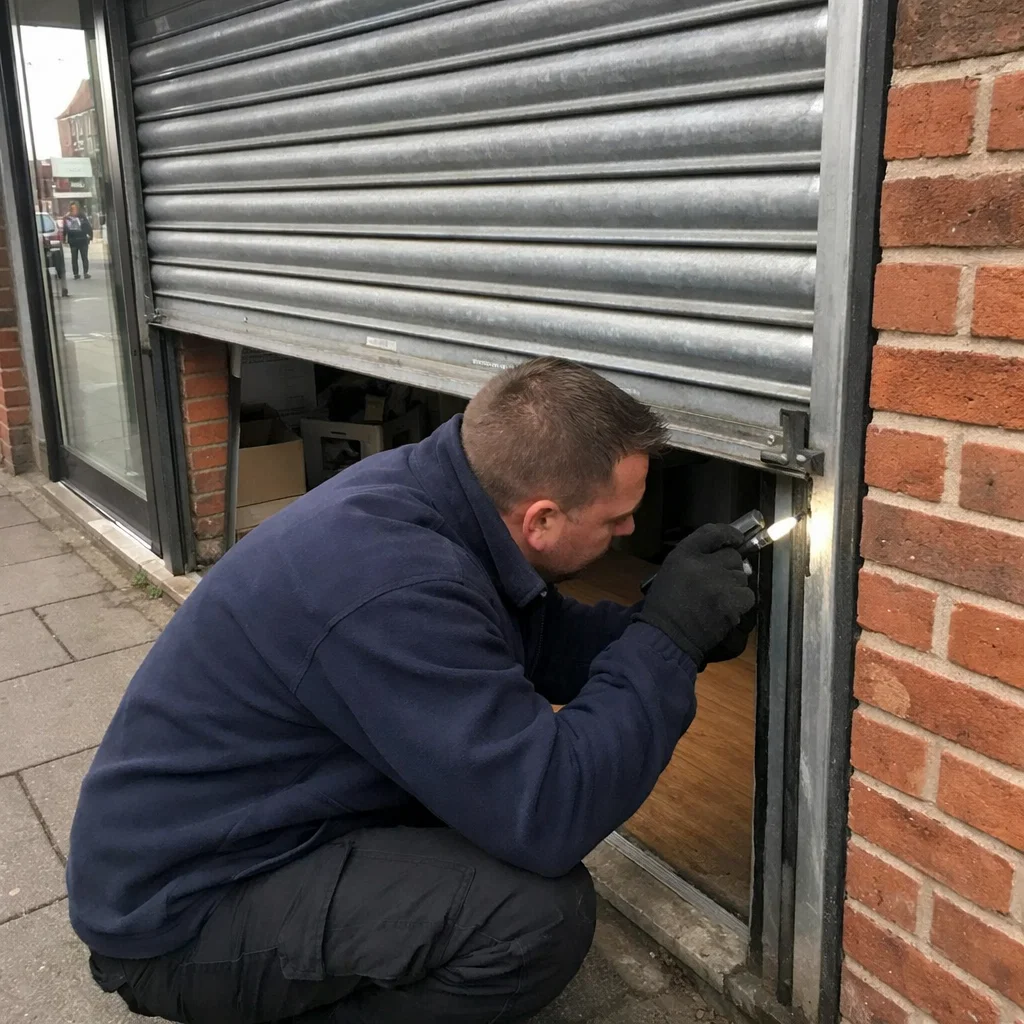
When you type shutter repair near me West Midlands into Google, you are rarely browsing out of curiosity. Usually, you are dealing with a shutter that will not open, will not close, or has been damaged after an impact or attempted break-in. As a result, you need more than a quick fix. You need an engineer who can restore security, keep people safe, and get you trading again.
However, not every company advertising “24/7” operates with the same standards. Some can attend quickly but cannot complete repairs safely. Others can repair well, but they do not carry the right parts or cannot secure the premises if a full repair is not possible at night.
This guide explains what a reliable emergency shutter engineer looks like in practice. In addition, it gives you a clear checklist for choosing the right help, whether you run a shopfront in Birmingham, a unit in Wolverhampton, or a warehouse anywhere across the West Midlands.
Why “near me” matters when your shutter fails
A roller shutter failure is time-sensitive because it affects three things immediately: security, safety, and business continuity. Therefore, “near me” should mean more than a postcode on a website. It should mean the engineer can attend quickly, understands local commercial sites, and can source parts without days of delay.
In practice, West Midlands response times depend on routing, on-call cover, and whether the firm runs local engineers or travels in from outside the region. Consequently, it is worth confirming how they organise emergency cover rather than relying on broad claims.
At the same time, a truly reliable company will not rush a dangerous repair. Instead, they will prioritise making the shutter safe and secure, then complete a correct fix with the right parts and testing.
Common roller shutter emergencies and what they usually mean
If you describe the symptoms clearly, you help the engineer arrive prepared. For this reason, it helps to recognise common fault patterns.
Typical emergency issues include:
-
Shutter stuck closed: often a motor issue, a failed brake, a jammed curtain, or damaged guides.
-
Shutter stuck open: sometimes a failed motor, snapped locking, a de-tracked curtain, or a control fault.
-
Loud grinding, scraping, or clunking: commonly misalignment, worn end locks, guide damage, or loose fixings.
-
Shutter drops unevenly or “leans”: frequently a curtain issue or guide alignment problem.
-
Key switch or control panel not responding: could be power supply, isolator, fuses, contactors, or wiring faults.
-
Impact damage (delivery vehicle, trolley, forklift): may bend guides, bottom rail, or curtain slats.
-
After attempted break-in: guides may be forced, locks damaged, and the curtain may be deformed.
Although some faults look minor at first, continuing to operate a struggling shutter can make the failure worse. As a result, you can turn a straightforward repair into a bigger job that involves a new curtain or motor.
What a reliable 24/7 shutter engineer looks like
A good emergency service is built around consistency. In other words, the company should deliver the same quality of repair at 2pm as it does at 2am.
Fast attendance with a proper make-safe plan
Response time matters, but so does what happens when the engineer arrives. Therefore, ask whether they can secure the premises if they cannot complete the full repair immediately. For example, a responsible engineer might isolate a faulty motor, stabilise the curtain, re-seat a de-tracked shutter, or fit temporary locking while parts are sourced.
Meanwhile, be wary of anyone who promises a “guaranteed fix” over the phone without asking questions. A professional engineer will always triage the fault first because shutters vary by type, size, and control system.
The right van stock and realistic parts access
Emergency repairs often succeed because the engineer carries the basics. Consequently, reliable firms stock common consumables such as fixings, locks, guides, and control components, plus a range of tools for safe access and isolation.
On the other hand, specialist parts like certain motors, end plates, or bespoke curtains may not be available at night. Therefore, a trustworthy company will explain what they can do immediately and what needs a follow-up visit, without overselling the outcome.
Clear communication and documentation
During an emergency, confusion costs time. Because of that, reliable engineers explain the fault in plain terms, confirm what they will do next, and provide a record of the work.
In addition, they should leave you with guidance on safe operation, any restrictions, and what to monitor until a planned service visit.
Safety, compliance, and why it should influence your choice
Powered roller shutters are work equipment, and businesses have responsibilities to maintain equipment so it remains safe. For this reason, good engineers do not treat safety as an optional extra.
A competent repair approach typically includes:
-
Safe isolation of electrical supplies before working on controls or motors
-
A controlled method for dealing with tensioned components where applicable
-
Checks that the shutter runs smoothly without snagging or binding
-
Verification that any safety features fitted operate as intended
-
A handover that confirms the shutter is safe to use, or clearly marked as restricted
Similarly, a professional company should carry appropriate insurance for commercial work. You do not need to be an expert in policy wording, but you should ask the question. If they hesitate, that tells you something.
Questions to ask when you call a 24/7 shutter repair service
When you are stressed, it is easy to ask only one question: “How quickly can you get here?” However, you can learn a lot by asking a few more practical questions.
Use this quick phone checklist:
-
Are you sending a roller shutter specialist engineer, or a general handyman?
-
Do you cover my postcode with local engineers, tonight?
-
Can you make the site secure if a full repair is not possible immediately?
-
What is your call-out charge and what does it include?
-
Do you provide a written job report after the visit?
-
Will the engineer carry common parts for my shutter type?
-
Can you work around our trading hours if needed?
In addition, be ready to share key details so the engineer arrives prepared.
Information to give the engineer for faster diagnosis
A two minute description can save you an hour on site. Therefore, share:
-
Shutter type: shopfront roller shutter, industrial shutter, or internal security shutter
-
Operation: electric, manual, or chain operated
-
Symptoms: stuck open, stuck closed, noisy, uneven, intermittent
-
Any visible damage: bent guide, dented slats, forced locks
-
Site constraints: height, access, loading bay, shutters in a row
-
Power status: any tripped breakers, isolator position, recent electrical work
-
Photos or a short video, if safe to take
At the same time, do not force the shutter if it is jammed. That can worsen the damage and create a safety risk.
Understanding emergency pricing without getting caught out
Emergency shutter work costs more because it requires on-call engineers, night attendance, and ofte
n immediate security action. However, reputable firms still price transparently.
Before the engineer attends, try to confirm:
-
Call-out fee and
-
what it covers
-
Hourly labour rates and minimum charges
-
Out-of-hours uplift, if applicable
-
Expected parts costs for common faults
-
Payment methods and when payment is due
In addition, ask whether the visit could involve two engineers. For larger shutters, safe handling may require a second person, especially if the curtain has de-tracked or suffered impact damage.
A reliable company will not give you a “one price fits all” quote without context. Instead, they will provide a clear pricing structure and then confirm the scope on site before proceeding.
What should happen during an emergency shutter repair visit
Knowing the process helps you spot professionalism. Consequently, you can judge the engineer on actions, not just reassurance.
A typical best-practice call-out looks like this:
-
Arrival and safety assessment
The engineer checks access, identifies immediate risks, and confirms the shutter can be worked on safely. -
Isolation and initial diagnosis
They isolate the system where required, then inspect guides, curtain, locks, motor, and controls. -
Make-safe and secure the premises
If the shutter is stuck open, the priority becomes restoring security. Therefore, the engineer may stabilise the curtain, re-seat it, or fit temporary measures. -
Repair and alignment
They repair the root cause, not only the symptom. For example, they correct misalignment, replace damaged locks, or resolve motor and control issues. -
Operational test and final checks
The shutter should run smoothly, stop correctly, and operate consistently. Meanwhile, the engineer should confirm any safety devices fitted function as expected. -
Handover and report
You should receive a summary of what failed, what was replaced, what remains to do, and recommendations for prevention.
If any step is missing, ask why. A professional will explain without getting defensive.
Red flags when choosing a “shutter repair near me” provider
Because emergency situations create pressure, poor operators rely on urgency to lower your standards. For this reason, watch for these warning signs:
-
They will not explain pricing structure until after the work
-
They insist on cash only, or they avoid documentation
-
They cannot confirm insurance, or they downplay safety obligations
-
They push immediate replacement without diagnosis
-
They promise arrival times they cannot realistically meet
-
They do not ask any questions about shutter type or symptoms
-
They appear reluctant to secure the site if a full repair is delayed
On the other hand, a good engineer will ask questions, set expectations, and focus on making the shutter safe before making it fast.
How to reduce repeat call-outs after an emergency repair
An emergency repair fixes today’s fault. However, the best outcome is fewer emergencies next month and next year. Therefore, it pays to put simple preventative steps in place.
In practice, these habits reduce breakdowns:
-
Keep guide channels clear of grit, packaging straps, and debris
-
Avoid closing onto obstructions, especially at shopfront thresholds
-
Listen for new noises and slow operation, then act early
-
Log faults and repairs so you can spot repeat patterns
-
Book planned servicing based on usage, not only on age
Similarly, if you operate multiple shutters across sites, create a basic maintenance log. Over time, that log helps you plan replacements before failures force downtime.
Choosing a specialist engineer for shopfront and roller shutters
Roller shutters combine mechanical load, electrical controls, and safety-critical moving parts. As a result, general maintenance contractors can struggle when faults involve alignment, motors, brakes, or curtain tracking.
A specialist shutter engineer brings three advantages:
-
Experience with fault patterns, so diagnosis is faster
-
Correct tools and spares, so the repair is more likely to complete in one visit
-
Safer methods of work, which protects your staff, customers, and premises
Ultimately, a reliable repair is the one that keeps operating without returning faults. Therefore, choosing a specialist often costs less over a year, even if the call-out fee looks higher.
Shutter repair near me West Midlands: FAQs
How quickly should a 24/7 engineer attend in the West Midlands?
It depends on location, traffic, and on-call cover. However, a reliable provider will give a realistic attendance window and update you if circumstances change. In addition, they should offer a make-safe option if parts are not immediately available.
Can you secure my premises if the shutter is stuck open?
A competent emergency engineer should prioritise security. Therefore, they should be able to stabilise the shutter, re-seat a de-tracked curtain, isolate a faulty motor, or apply temporary locking where appropriate. If a company cannot offer any make-safe plan, consider an alternative.
Is it safe to keep using a shutter that is noisy or slow?
Usually not. Although it may still move, noise and hesitation often signal misalignment, wear, or motor strain. As a result, continued use can worsen the damage and increase repair costs.
What causes roller shutters to jam most often?
Misalignment and debris in the guides cause many jams. Meanwhile, impact damage, forced entry, and worn components also contribute. Because shutters carry load through the guides and barrel, small issues can escalate quickly if left unchecked.
Do I need planned maintenance if I only use the shutter once a day?
Yes, although the interval can vary. Even low-cycle shutters suffer from weather exposure, corrosion, and gradual loosening of fixings. Therefore, planned checks help you avoid sudden failures and out-of-hours costs.
What should I do before calling a shutter repair engineer?
First, stop using the shutter if it jams or makes unusual noises. Next, ensure the area is clear and safe, then take a photo if you can do so safely. Finally, call with the shutter type, symptoms, and location details to speed up diagnosis.
A practical way to choose the right team
When you need shutter repair near me West Midlands, look for an engineer who can attend quickly, communicate clearly, and repair safely. In addition, prioritise companies that can secure your premises, document the work, and support planned maintenance afterwards.
This is where a specialist approach matters. Sunrise Shutters, for example, focuses on shopfront and roller shutter repairs across the West Midlands, with an emergency mindset that starts with safety and security first. Consequently, you get a practical, site-ready response rather than guesswork.