

When you plan a new roller shutter, one of the first decisions is how it will be opened and closed. Some businesses are happy to lift a shutter by hand each morning. Others want to press a button or a remote and let a motor do the work. Choosing between manual vs electric roller shutters affects daily convenience, staff safety, security and maintenance for years to come.
This guide explains the main types of manual and electric operation, where each one works best and what to think about before you decide. Consequently, you can choose the option that suits the way your premises actually run, rather than the one that simply looks cheapest on paper.
Manual vs electric roller shutters: the quick answer
Manual shutters suit smaller openings that are used once or twice a day by someone who can operate them safely. Electric shutters suit larger or heavier openings, frequent use, and premises where staff need quick, easy and consistent operation.
In practice, the decision usually depends on:
- the size and weight of the shutter curtain
- how often the shutter opens and closes each day
- who operates it, and whether they can do so safely and comfortably
- whether there is a power supply at the opening
- how the shutter will be secured when it is closed
- what happens if the power fails
The main types of manual roller shutter
Push-up (spring-assisted) shutters
A push-up shutter is lifted and pulled down by hand. Springs inside the barrel help balance the weight of the curtain, so it feels lighter than it is. These shutters are common on small shopfronts, kiosks and serving hatches.
They are simple and have no motor to maintain. However, they are only practical for smaller openings. In addition, the person operating them must reach the bottom rail safely and lock it at floor level, usually with padlocks or a central lock.
Gear-operated shutters
On larger openings, a manual shutter may be operated through a gearbox using a handle, a crank or an endless hand chain. The gearing reduces the effort needed, but opening a large shutter this way still takes time.
Gear-operated shutters can work well for openings that are used rarely, such as a rear access door or a seldom-used store. For daily use, many businesses find them slow and tiring.
How electric roller shutters work
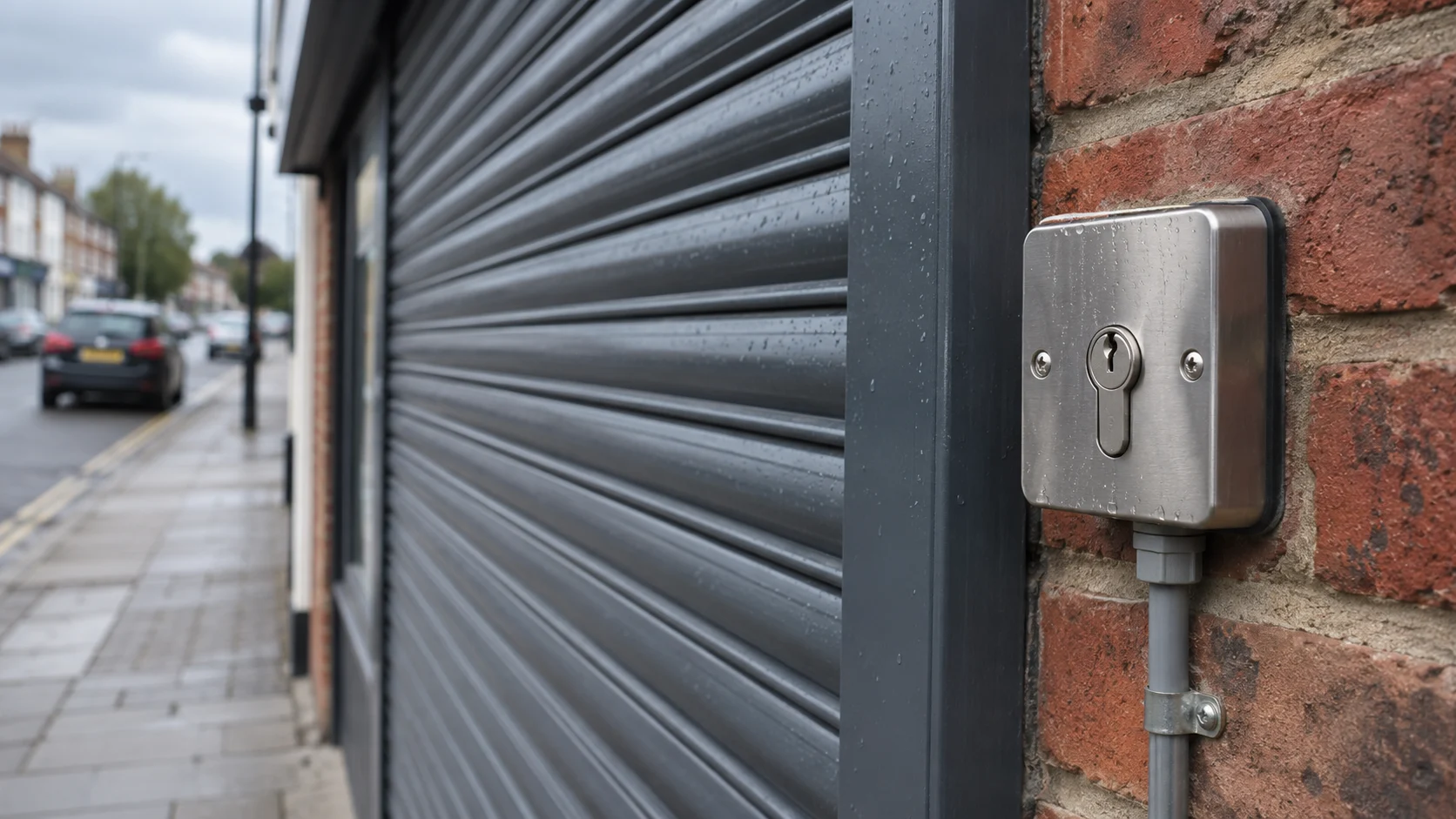
An electric shutter uses a motor, usually fitted inside or at the end of the barrel, to raise and lower the curtain. It is controlled by a key switch, push button, remote control or keypad, depending on the setup and how the site is used.
Limit settings tell the motor where to stop at the top and bottom of travel. Depending on the installation, safety devices such as a safety edge or photocells may also be fitted to help stop or reverse the shutter if it meets an obstruction.
Most electric shutters also have some form of manual override, so the shutter can be operated if the power fails. How that works varies between systems, so it is worth asking how it operates on your shutter and who should use it.
Advantages and drawbacks at a glance
Manual shutters
- Pros: simple mechanism, no electrical supply needed, fewer components to fail
- Cons: physical effort, slower on larger openings, staff must lock and unlock at ground level, harder to use in bad weather or late at night
Electric shutters
- Pros: quick and consistent operation, suitable for larger and heavier curtains, no lifting or bending, can be opened from inside or by remote, less strain on the curtain from rough handling
- Cons: needs a power supply and safe electrical installation, more components to service, controls and safety devices need regular checks
Safety and daily use
Safety is often the deciding factor. Lifting a heavy curtain by hand, bending to fit floor locks or working a chain for several minutes every day can put strain on staff. Over time, that can lead to shutters being left half open, locks not being fitted properly or curtains being forced.
Electric shutters remove much of that handling. However, powered doors bring their own responsibilities. They should be installed by competent engineers, set up with suitable safety devices for the location, and serviced regularly. For commercial and industrial doors, routine servicing is also part of meeting health and safety obligations.
Therefore, think honestly about who will open and close the shutter, how often they will do it and in what conditions.
Security considerations
Operation type and security are linked. A manual shutter usually relies on locks at the bottom rail or the guides. If those locks are forgotten, damaged or forced, the shutter can be lifted.
An electric shutter is held in position by the motor and its gearing when closed, and it can be operated from inside the premises. Many businesses find this convenient and reassuring, especially where the external control point is protected or the shutter is opened from inside. However, the controls themselves must be well placed and in good condition. Our article on reducing vandalism and impact damage covers weak points such as key switches and edges.
Whichever type you choose, the curtain, guides and fixings still decide how well the shutter resists attack. See our guide to roller shutter security ratings if your insurer has specific requirements.
Which option suits your premises?
Small shops, kiosks and hatches
A manual push-up shutter can work well where the opening is small, the shutter is used at opening and closing time only, and staff are comfortable operating and locking it. Even so, many small retailers choose electric operation for convenience and consistency.
Larger shopfronts and parades
Wide shopfront shutters are heavier and harder to lift evenly. Electric operation is usually the more practical choice. Our shop roller shutters page shows the kind of work we do for retail premises.
Warehouses, workshops and loading bays
Industrial openings are often large and used many times a day. In these settings, electric shutters are the norm, and manual operation is usually limited to emergency use.
Domestic garages
Homeowners face the same trade-off on a smaller scale. Our comparison of roller and sectional garage doors covers operation as part of choosing a garage door.
Can a manual shutter be converted to electric?
Sometimes. Whether a manual shutter can be motorised depends on the condition of the curtain, guides and barrel, the size of the opening and whether a suitable power supply can be provided. In some cases, conversion makes sense. In others, especially where the shutter is old or worn, replacement is the better long-term option.
If you already have an electric shutter that has become slow or unreliable, our article on signs it is time to upgrade your shutter motor will help you decide what to do next.
How we help
We survey the opening, ask how the shutter will be used and talk through the most suitable operation, controls and locking. Every roller shutter is made to order in our own workshop and fitted by our own team through our supply and installation service. Afterwards, we can keep it running through planned maintenance and repairs.
Frequently asked questions
Are electric roller shutters better than manual ones?
Not in every case. Electric shutters are easier and quicker to use, especially on larger openings. Manual shutters can suit small openings used once or twice a day. The right choice depends on size, frequency of use and who operates the shutter.
What happens to an electric shutter in a power cut?
Most electric shutters have a manual override so they can be operated without power. How it works varies between systems, so ask your installer to show you how yours operates.
Can I add a remote control to my shutter?
On many electric shutters, a remote receiver can be added to the control setup. A manual shutter would first need to be motorised, if it is suitable for conversion.
Do electric shutters need more maintenance?
They have more components, including the motor, controls and any safety devices, so regular servicing is important. Manual shutters still need their springs, curtain, guides and locks checked.
Is it safe to lift a manual shutter every day?
It depends on the size and weight of the curtain and the person operating it. If staff struggle to lift or lock the shutter, electric operation is worth considering.
Final thoughts
The choice between manual vs electric roller shutters comes down to how the opening is used every day. Manual operation can be perfectly sensible on small, lightly used openings. For larger shutters, frequent use or premises where safety and speed matter, electric operation is usually the more practical long-term choice.
If you are planning a new shutter or thinking about upgrading an existing one in Birmingham or across the West Midlands, Sunrise Shopfronts & Shutters can survey the opening and recommend the right setup.
Speak to the team: call 07931 104162 for installation and servicing, 07931 104160 for 24/7 emergencies, or email info@sunriseshutters.co.uk.
