
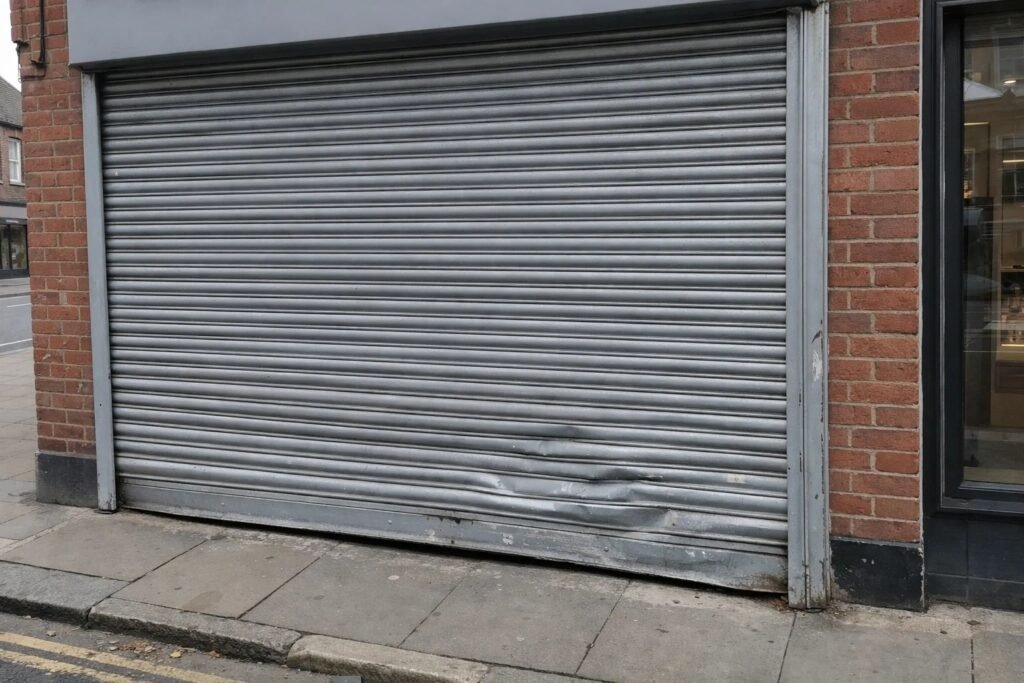
A bent guide rail, broken lock, dented bottom rail or cracked pane often gets written off as bad luck. Sometimes it is. However, repeated shopfront repair jobs usually follow a pattern. Police crime prevention advice for businesses stresses visible security, tidy property maintenance, removal of graffiti, review of vulnerable areas, good alarms and strong lighting, especially around loading areas. In other words, the condition and management of the frontage play a real role in whether it gets targeted or damaged again.
For retailers and small business owners, that matters because one incident often exposes the same weakness that leads to the next one. Meanwhile, homeowners with garage shutters, domestic security shutters or mixed-use frontages can apply many of the same principles to protect vulnerable entry points and reduce repair risk.
Why damage keeps coming back
In practice, repeat damage happens when the same force meets the same weak point over and over. A van clips the same guide during deliveries. A wheelie bin gets left in the same strike zone. Graffiti sits too long, making the site look unmanaged. Staff keep reversing near a shutter without clear rules.
As a result, the next incident becomes more likely, not less. That is why a good shopfront repair strategy starts before the next repair. It looks at visibility, access, traffic flow and weak hardware, not just the damaged slat or pane.
Reducing vandalism damage before it starts
Keep the frontage visible, tidy and clearly managed
Police.uk says properties should stay visible, tidy and easy to overlook from the street, while West Midlands Police says visible security and property maintenance are often the strongest deterrent against crime. Both also advise removing graffiti and reducing opportunities for offenders to hide or linger.
For a business, that means:
- remove graffiti quickly
- clear litter, packaging and fly-posting
- trim planting that blocks visibility
- avoid stacked bins or loose items near the frontage
- keep shutters, glazing and frames looking maintained
This matters because vandalism damage often starts where neglect is already visible. A frontage that looks looked-after sends a very different message from one that looks ignored.
Strengthen the easy targets
West Midlands Police advises businesses to identify vulnerable points, keep service doors secure, maintain a monitored alarm, review CCTV coverage and ensure lighting is sufficient, especially around loading areas. That is practical advice because attacks do not always begin in the middle of the shutter. They often start at the edge, the rear access point, the key switch, or the dark corner just outside camera view.
In addition, move high-value stock away from the window line overnight, keep keys and override devices under control, and make sure only designated people can access them. If the weakest point is easier to reach than the strongest one, that is where the damage will happen.
Use simple surface-level protection where it suits the site
For homes and smaller premises, Police.uk recommends clear boundaries, visibility, security film on vulnerable glazing and anti-graffiti coatings on surfaces that attract spray paint. Those measures will not replace a robust shutter, but they can reduce nuisance damage and shorten clean-up time after minor incidents.
Reducing accidental impact damage from vehicles and deliveries
Reversing is a bigger risk than many sites admit
HSE says nearly a quarter of workplace transport deaths occur during reversing, and many more reversing incidents cause costly damage to vehicles, equipment and premises. That matters for shopfront repair because guide rails, bottom rails and corner posts sit directly in the line of slow-speed contact damage.
If vans, forklifts or delivery vehicles reverse near your frontage, reduce the opportunity. One-way routes, drive-through arrangements and clearly marked reversing areas immediately lower the chance of an avoidable strike. HSE also says visiting drivers should understand the site layout and rules before they manoeuvre.
Separate people, vehicles and the shutter line
HSE workplace transport guidance says vehicles and pedestrians should be kept safely apart where possible, with suitable routes, crossings, barriers and a clear site layout. It also recommends reducing manoeuvring and reversing, keeping parked vehicles out of the traffic flow, and using physical precautions such as barriers and bollards where appropriate.
For shopfronts, that usually means:
- use bollards or barriers where vehicles can swing close to the shutter
- mark loading and no-parking zones clearly
- keep trolleys, cages and bins away from the opening path
- create a defined pedestrian route so staff do not cross delivery space casually
- avoid leaving parked vehicles directly in front of frequently used shutters
Treat loading bays and side access as part of the frontage
Damage often happens beside the main entrance, not in front of it. HSE notes that loading bay edges should be clearly marked and workplaces should be kept free from obstructions. In practice, that means side shutters, rear access doors and delivery points need the same protection mindset as the main shopfront.
Small daily habits that reduce repeat shopfront repair bills
A surprising amount of accidental damage comes from routine behaviour rather than dramatic events. Therefore, review the habits around the entrance, not just the hardware.
The biggest improvements often come from simple changes:
- brief delivery drivers before they reverse on site
- assign one unloading zone rather than letting each driver improvise
- keep wheelie bins and loose stock away from guide rails
- do not close shutters onto boxes, mats or thresholds that are not clear
- make sure staff do not leave the shutter half-open in busy loading periods
- review CCTV after near-misses, not only after actual damage
These are not expensive changes. However, they are often the difference between one isolated incident and repeated shopfront repair work.
Protect the components that fail first
Not every part of the frontage takes the same punishment. If you want stronger protection against both vandalism damage and accidental knocks, focus on the parts that usually fail first.
Guide rails and bottom rails
These are the most common impact points. Even a small bend can create drag, noise, poor alignment and motor strain.
Locks, key switches and control points
After a forced-entry attempt, the manual lock or external control is often the hidden weak point. If the curtain resists, the attacker often shifts to the access hardware instead.
Glazing edges, frame returns and fascia details
A shutter might protect the opening after hours, but the wider shopfront still matters. Cracked trims, loose frame sections and damaged glazing invite further attacks because they signal weak maintenance and easy follow-up access.
What to do immediately after vandalism or impact damage
First, stop using the shutter if it is twisted, snagging, rubbing or behaving unpredictably. HSE says dangerous powered systems should be taken out of use until safety concerns are addressed, and those carrying out repair work must leave the system safe.
Then take these steps:
- photograph the damage if it is safe to do so
- keep staff, customers or family members away from the opening
- do not keep cycling the shutter to “see if it clears”
- check nearby glazing, controls and fixings for hidden damage
- arrange a make-safe repair if the premises cannot be secured
This part matters because many repeat faults begin with the wrong decision immediately after the incident, usually forcing a damaged shutter to move again.
Turn one incident into a prevention plan
A repair invoice tells you what broke. A short review tells you why. Therefore, after any vandalism damage or impact, look at the time, the approach route, blind spots, lighting, staff habits and whether the damage point had any real protection at all.
For businesses, keep a simple incident log with:
- date and time
- likely cause
- exact damage location
- whether CCTV captured it
- temporary fix completed
- permanent repair required
- preventative change made afterwards
Over time, this becomes far more useful than people expect. It shows whether your biggest risk comes from late-night loitering, delivery vehicles, poor parking, recurring misuse or a weak control point that keeps being targeted.
Why specialist support matters after a damage-related repair
A basic repair can replace the obvious broken part. A better specialist will make the site safe, restore proper function, and explain what needs to change so the same shopfront repair is less likely next month.
That is where Sunrise Shutters fits naturally. Sunrise positions itself around 24/7 emergency shutter repairs, ongoing maintenance, bespoke manufacture and installation, with support across Birmingham, the West Midlands and beyond. For owners who want a repair partner to think about future protection as well as immediate replacement, that sort of joined-up service is usually the stronger long-term choice.
Frequently asked questions
Can a shutter still work after impact damage and still need repair?
Yes. A shutter can continue to move after a low-speed knock while the guide, bottom rail or curtain tracking has already shifted. “It still opens” is not a reliable safety check.
Does CCTV stop vandalism on its own?
Not usually. Police guidance supports CCTV as part of a wider approach that also includes visible maintenance, lighting, alarms, secure access points and good housekeeping. CCTV works best when it supports deterrence, evidence and quick review after incidents.
What is the best way to reduce delivery-related shopfront repair?
Usually, it is a mix of layout and discipline. Reduce reversing, mark routes clearly, keep pedestrians separate, brief visiting drivers and protect the frontage physically where vehicles come close. HSE workplace transport guidance strongly supports those controls.
Final thoughts
Vandalism and accidental impact damage are not always avoidable. Repeat shopfront repair bills usually are. If you improve visibility, remove graffiti quickly, protect vulnerable points, manage deliveries properly and review every incident for its real cause, you reduce both the chance and the cost of the next repair.
Ultimately, strong protection is about habits as much as hardware. A cleaner frontage, better lighting, smarter traffic flow and a fast specialist response do more than repair damage. They help stop it becoming a pattern.