
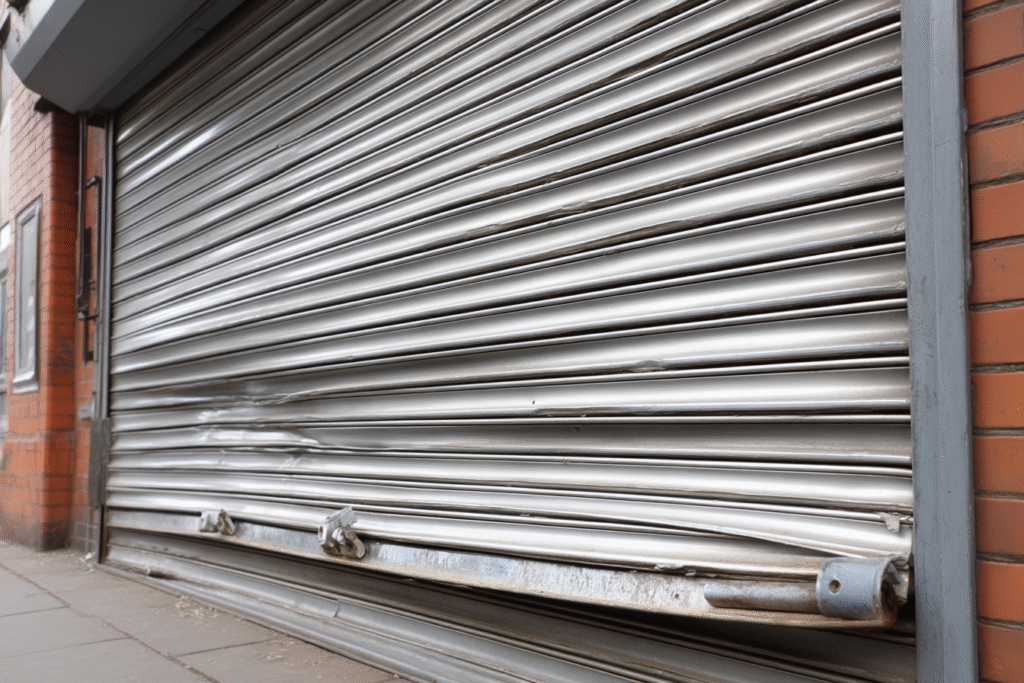
A break-in rarely leaves a roller shutter “slightly bent”. More often, it leaves a shopfront partially open, jammed shut, or hanging out of its guides — and that creates immediate risks: further theft, injury to staff or customers, and additional damage to the shutter, frame, electrics, or even the shopfront structure.
This guide is written for business owners, facilities managers, and site supervisors across the West Midlands (Birmingham, Wolverhampton, Walsall, Dudley, Solihull, Coventry and surrounding areas) who need clear, practical direction in the first few hours after an incident. You’ll learn what to do straight away, when a full shutter repair after break-in is realistic, and when temporary securing is the safer option until the right parts and conditions are in place.
If you’re searching for emergency shutter repair or need to secure a shopfront fast, the goal is simple: make the premises safe, prevent further loss, and avoid turning one break-in into a bigger (and more expensive) structural problem.
What to do in the first 1–2 hours after a break‑in
The first steps are less about “fixing the shutter” and more about safety, evidence, and controlling the risk. This is also where many well-meaning mistakes happen (like forcing a damaged shutter down), so follow a calm, structured plan.
Immediate actions checklist (useful for a quick featured snippet)
-
Make sure everyone is safe. If you suspect anyone is still on site or there’s immediate danger, call 999.
-
Do not force the shutter. A jammed or misaligned shutter can collapse, rip out fixings, or damage the motor and barrel.
-
Preserve evidence. Avoid touching tools, debris, or the shutter mechanism more than necessary.
-
Secure people and the perimeter. Keep staff and the public away from sharp edges, broken glass, and unstable curtain sections.
-
Isolate power (if safe to do so). If the shutter is electric and there’s visible damage to the switch, cable, or motor area, turn power off at the local isolator if accessible and safe.
-
Document everything. Photos/video of the shutter, guides, locks, and any damage to the shopfront frame.
-
Arrange emergency shutter repair / securing. Ask for a safety-first call-out to assess whether repair is possible now or whether temporary securing is needed.
-
Contact your insurer once the site is stable. Many policies expect you to take reasonable steps to prevent further loss.
Safety first: what “danger” looks like with damaged roller shutters
Treat the following as hazards that justify stopping operations until assessed:
-
A shutter curtain bowed outward (can “spring” or snag on descent)
-
Curtain out of one guide, with slats twisting
-
Detached bottom rail or hanging locks
-
Grinding noises, burning smells, or motor strain
-
Exposed sharp edges from torn slats or cut attempts
-
Loose shutter box/fascia, or fixings pulled from masonry/steelwork
In short: if it doesn’t look square, it isn’t safe to operate.
Why you should never force a damaged shutter (even if it “almost closes”)
After a break-in, it’s common to think: “If we can just get it down tonight, we’ll deal with repairs later.” Unfortunately, forcing a compromised shutter is one of the fastest ways to turn a repairable job into a replacement.
What goes wrong when you force it
A roller shutter is a system: curtain (slats), end locks, guides, barrel/shaft, motor/gearbox, stops, and fixings all work in alignment. Break-in damage typically causes misalignment, which means the shutter starts loading parts in ways they weren’t designed to handle.
Forcing it can cause:
-
Curtain “telescoping” (slats stepping sideways on the barrel)
-
End locks tearing (so it won’t retain securely in the guides afterwards)
-
Guide damage worsening (spreading, cracking, or pulling away from the opening)
-
Barrel/bracket stress (bending or pulling fixings from the lintel)
-
Motor failure (overload, damaged brake, stripped gearbox, limit issues)
-
Sudden drop risk (especially where components are already compromised)
The hidden risk: shopfront and structural damage
A forced shutter doesn’t just damage the shutter. It can also:
-
Pull fixings from brickwork/blockwork
-
Crack render or shopfront frames
-
Distort aluminium/glass shopfront systems
-
Create gaps that allow wind to “work” the opening, worsening damage overnight
If your priority is to secure your shopfront, the safest route is often controlled securing by a competent engineer, not brute force.
Repair vs temporary securing: how to decide what’s safest
A professional emergency shutter repair call-out should always start with the question:
Can we make it safe and secure today without creating further risk?
Sometimes, the answer is a same-day repair. Other times, temporary securing is the right solution until parts arrive or the site can be properly restored.
When a full shutter repair after break‑in is often possible immediately
Same-day repair is more likely when:
-
Damage is localised (e.g., a few bent slats, damaged locks, minor guide deformation)
-
The shutter is still square in the opening and the barrel is stable
-
Fixings are intact and the shopfront frame hasn’t moved
-
The motor/gearbox hasn’t been overloaded or torn from mountings
-
The engineer can safely test operation and confirm controlled travel
Typical “repairable now” work includes:
-
Replacing a section of curtain/slats
-
Renewing end locks and bottom rail stops
-
Re-aligning or replacing guide rails
-
Replacing a lock barrel or hasp (where applicable)
-
Resetting limits and testing safe operation (where appropriate)
When temporary securing is the safer option
Temporary securing is usually the better call when:
-
The curtain is out of the guides or twisted on the barrel
-
The shutter box, barrel, or brackets are loose or fixing points are compromised
-
There’s electrical damage, exposed wiring, or evidence of forced motor operation
-
The opening itself is compromised (shopfront frame bent, masonry damaged)
-
There’s a risk the shutter could drop, snag, or fail during operation
-
The correct components aren’t available that night (certain slat profiles, powder-coated finishes, specialist motors)
A good emergency response prioritises controlled stabilisation, not rushed operation.
Temporary securing options that genuinely protect a shopfront
“Temporary” shouldn’t mean “flimsy”. The goal is to restore a secure barrier that deters repeat attempts, protects stock, and keeps the premises safe until permanent repair is completed.
1) Controlled shutter stabilisation (where safe)
If the shutter can be moved safely under engineer control, it may be possible to:
-
Bring it down to a secure position
-
Fit temporary retention (depending on the shutter design)
-
Prevent lateral movement in guides
-
Disable unsafe operation until repaired
This is only appropriate when the mechanism is stable and the engineer can verify it won’t snag or collapse.
2) Professional boarding/boarding-up (properly fixed)
Boarding is often the safest option when the shutter cannot be safely operated or the opening is structurally compromised.
Best practice boarding includes:
-
Correct thickness boards for the opening and risk level
-
Fixing methods that resist prising (not just a few screws at the edges)
-
Edges sealed and secured to reduce footholds and leverage points
-
Consideration of fire exits and access requirements (don’t block required egress routes)
Boarding is a security measure, but it must also respect building safety and access control.
3) Internal secondary barriers
Depending on premises type, an internal barrier can help reduce risk even if the external shutter is compromised:
-
Internal security screens/grilles (where available)
-
Relocating high-value stock away from the frontage
-
Temporary restricted access to exposed areas
This doesn’t replace proper shutter repair after break-in, but it reduces vulnerability.
4) Temporary lock/guide interventions (only with the right parts)
In some cases, a temporary lock change or guide stabilisation can prevent the shutter being easily pulled or peeled again, but these must be compatible with the existing shutter profile and installation.
What engineers look for during an emergency shutter repair call‑out
A credible emergency response is systematic. In practical terms, a roller shutter engineer should be checking:
Curtain and guides
-
Bent or torn slats, slat profile compatibility
-
End locks (often damaged during “peeling”)
-
Guide spread, cracking, missing fixings, and alignment
-
Evidence of the curtain riding up the guide or “walking” sideways
Barrel, springs and mountings
-
Barrel straightness and bracket integrity
-
Signs of curtain telescoping on the barrel
-
Fixings in lintel/masonry/steelwork holding firm
-
Any unusual slack or tension that indicates failure risk
Motor, controls and electrical safety
-
Motor mounting stability
-
Manual override condition (where fitted)
-
Key switch / rocker switch damage
-
Limit settings and safe travel (only tested when it’s safe to do so)
-
Signs of overload (burning smell, tripping, strained operation)
Shopfront and structural opening
-
Frame distortion, damage to glazing systems, and compromised fixing points
-
Whether the shutter can physically run without striking or grinding
-
Whether the opening needs temporary securing while the frame is stabilised
An experienced provider like Sunrise Shutters will usually focus on a simple sequence: assess → make safe → secure → plan the correct repair. That’s how you protect people first while preventing additional damage to the shutter system.
What a proper repair should include (and what “good” looks like)
A durable repair isn’t just swapping a slat and leaving. For a commercial premises, the repair should restore:
-
Correct alignment (curtain runs smoothly without catching)
-
Secure retention in guides (especially important after a peel attack)
-
Safe operation (controlled travel, no abnormal strain, appropriate stops)
-
Reliable locking (whether central locking, shoot bolts, or other systems)
-
Sound fixings into suitable substrate (no “patchy” fixes into failed masonry)
Where the shutter is powered, the engineer should be confident the shutter is operating within safe limits and, in a commercial environment, you should treat shutters as work equipment that must be safe to operate by staff.
When replacement becomes better value than repair
Sometimes, replacement is the sensible route — not because “repair is impossible”, but because it’s uneconomical or compromises safety.
Replacement is often considered when:
-
Multiple slats are damaged across a large section
-
The barrel is bent or brackets have failed
-
Guides and fixings are extensively pulled out
-
The motor or gearbox is damaged beyond a cost-effective repair
-
The shutter no longer offers reliable security due to systemic distortion
A reputable engineer will explain why repair is or isn’t sensible and what risks remain if you choose the cheaper short-term option.
Preventing repeat incidents: practical upgrades after a break‑in
Once the immediate crisis is contained, it’s worth addressing the “why this was possible” question. Many repeat break-ins happen within days because attackers know a frontage is temporarily weakened.
Security-minded improvements often include:
-
Upgraded locking/retention to resist peel attacks
-
Stronger guide retention and properly specified end locks
-
Reviewing operation practices (never leaving shutters partially open)
-
Improving lighting and sightlines at the frontage
-
Ensuring CCTV coverage captures faces and the approach route
-
Considering secondary internal security if the site is high-risk
These measures aren’t about making your premises “invincible” they’re about making it a harder, noisier, slower target.
People Also Ask: emergency shutter repair and securing FAQs
Can I still use my roller shutter after it’s been forced?
Not safely, unless it has been assessed. If the curtain is out of line, bent, or snagging, operating it can cause a sudden drop, motor damage, or guide failure. Treat it as unsafe until a competent engineer confirms otherwise.
Is boarding up always necessary?
No. Boarding is one method to secure a shopfront, but if the shutter can be stabilised and safely secured, that may be preferable. The right choice depends on alignment, structural condition, and whether safe operation is possible.
What should I tell the emergency engineer when I call?
Have this ready:
-
Site address and access details
-
Whether the shutter is manual or electric
-
What position it’s in now (open/half/closed/jammed)
-
Visible damage (guides pulled away, slats bent, motor area damaged)
-
Any immediate hazards (glass, exposed wiring, unstable fascia)
-
Whether police have attended and whether you need to preserve evidence
Will my insurer expect me to repair immediately?
Insurers typically expect you to take reasonable steps to prevent further loss. That often means temporary securing first, then a documented repair plan once the site is stable. Keep photos, records of call-outs, and any crime reference details.
Is it better to replace the whole shutter after a break‑in?
Not always. Localised damage can often be repaired. But if the barrel, guides, fixings, or motor are compromised, replacement can be more reliable and cost-effective long term. The key is a truthful assessment, not a rushed decision.
How quickly can emergency shutter repair be done in the West Midlands?
It depends on damage severity and parts availability. Many call-outs are primarily about making the premises safe and secure immediately, then returning with the correct components for a full repair once sourced.
Final word: focus on safety, then security, then the right repair
A break-in is stressful — and a damaged shutter makes it feel urgent. But the best outcomes come from the right priorities:
-
Protect people and prevent injury
-
Secure the premises properly (without forcing unsafe operation)
-
Repair the shutter correctly so it works reliably and doesn’t fail again under load
If you need emergency shutter repair in the West Midlands, choose a specialist who treats roller shutters as engineered safety and security systems — not just something to “bash back into place”. Sunrise Shutters’ approach is built around that principle: stabilise, secure, then restore the shutter to proper working order with the right parts and checks.