
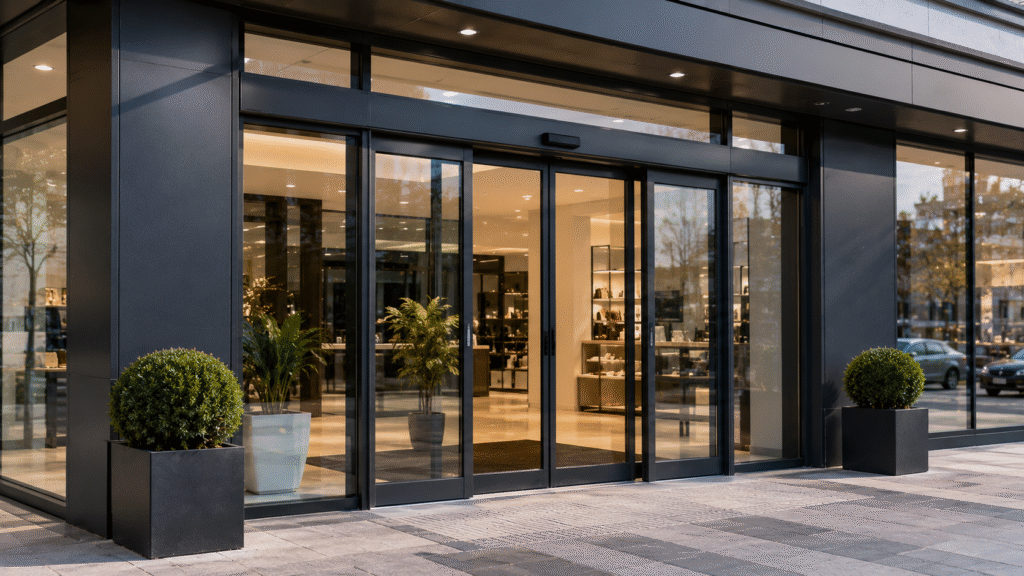
A commercial entrance does more than let people in and out. It shapes the first impression of the business, affects how easily customers enter, and influences security, comfort and daily efficiency. Therefore, tired frames, awkward manual doors or repeatedly damaged glazing should not be treated as isolated cosmetic problems.
Modern aluminium shopfronts and automatic doors can bring those elements together in one coordinated entrance. Sunrise Shopfronts & Shutters works with aluminium shopfront doors, automatic and sliding doors, single and double-leaf entrances, shopfront glazing and security shutters. As a result, businesses can review the whole frontage rather than repeatedly repairing separate components.
Although this guide focuses mainly on shops and commercial premises, the same warning signs can apply to home-based studios, private clinics and mixed-use buildings with customer-facing entrances.
When should you modernise a commercial entrance?
Consider a full shopfront upgrade when the entrance:
- looks dated or inconsistent with your brand
- creates difficulty for customers or staff
- needs increasingly frequent repairs
- contains damaged, marked or poorly fitted glazing
- allows noticeable draughts or weather ingress
- cannot support your current access and security needs
- has powered doors with unreliable or outdated safety features
One issue may justify a targeted repair. However, several problems appearing together usually suggest that aluminium shopfronts and automatic doors would provide a more coherent long-term solution.
1. Your entrance no longer reflects the business
Customers form an opinion before they cross the threshold. Faded finishes, damaged frames, mismatched panels and old temporary repairs can make an otherwise professional business look neglected.
This issue becomes particularly noticeable after an internal refurbishment or rebrand. The business may have modern displays, new signage and a high-quality customer area, while the entrance still looks several years behind.
Modern aluminium systems suit large areas of glazing because the material allows slim, low-profile frames while remaining durable and weather resistant. Sunrise also designs its shopfronts around both appearance and practical use, so the frontage can present the right image without sacrificing everyday performance.
Consequently, a coordinated upgrade often creates a cleaner result than replacing handles, trims and individual panes at different times.
2. Manual doors have become an access barrier
A heavy entrance door may seem manageable to regular staff. However, it can create genuine difficulty for wheelchair users, older customers, parents with pushchairs and anyone carrying bags, stock or equipment.
Approved Document M notes that self-closing manual entrance doors can be difficult for people with limited strength. It also describes powered opening and closing systems as the most satisfactory solution for most users, with automatic sliding doors offering particular benefits.
For this reason, aluminium shopfronts and automatic doors can improve more than convenience. They can make the entrance more inclusive while also supporting smoother movement during busy periods.
Nevertheless, automation must suit the people using the building. Sensors should activate early enough, doors should remain open long enough for safe passage, and manual controls should sit in accessible positions.
3. Repair visits are becoming routine
Occasional maintenance forms part of normal ownership. In contrast, recurring faults often point to a system that no longer provides reliable service.
Warning signs include:
- doors sticking or failing to close squarely
- sensors responding inconsistently
- locks becoming difficult to engage
- frames moving around the fixings
- repeated glass damage around the same area
- automatic doors stopping without a clear reason
- seals or thresholds failing soon after repair
At this stage, another isolated fix may only move the problem elsewhere. For example, replacing a door operator will not correct a distorted frame or unsuitable entrance layout.
HSE guidance says powered doors must be designed, installed and maintained safely. Commercial owners must also inspect them regularly and confirm that protective devices remain effective.
Therefore, repeated faults should trigger a full entrance assessment, not simply another parts replacement.
4. The glazing looks damaged, dated or unsafe
Shopfront glass plays a major role in appearance and visibility. Scratches, chips, cracks, failed seals or mismatched replacement panes can quickly undermine a carefully presented frontage.
Broken glass also creates a security concern and can discourage potential customers. Sunrise identifies quick shopfront glass replacement as an important part of restoring both appearance and protection.
However, replacement should involve more than matching the approximate size of the old pane. The installer should consider how people approach the entrance, how clearly they can identify glazed doors, and whether the wider arrangement suits the building.
Approved Document M states that people with visual impairments should be able to distinguish glass doors and screens clearly. It also links compliant glazed entrance design with the safety provisions in Approved Document K.
As a result, combining new glazing with aluminium shopfronts and automatic doors can produce a safer and more consistent outcome than changing glass alone.
5. Customers struggle during busy periods
An entrance that works adequately at quiet times may become frustrating when several people arrive together. Narrow openings, opposing traffic, awkward door swings and slow manual operation can create unnecessary congestion.
This matters in convenience stores, pharmacies, salons, showrooms and other premises where customers may enter with pushchairs, mobility aids or shopping bags. It also affects businesses that receive frequent deliveries through the customer entrance.
Approved Document M says accessible entrance doors should allow unrestricted passage for a variety of users. It specifically highlights wheelchair users, people with assistance dogs, parents with young children and people carrying luggage.
Automatic sliding doors can often remove the obstruction created by a swinging leaf. Meanwhile, a wider aluminium shopfront arrangement can give the entrance a clearer visual hierarchy.
Therefore, modernisation should consider traffic flow as well as door style.
6. Draughts and weather ingress affect the entrance area
A shopfront can look acceptable while still performing poorly. Worn seals, uneven thresholds, loose frames and badly aligned doors may allow cold air, rainwater or road dust into the entrance.
These problems affect comfort near reception desks, treatment areas, waiting zones and front displays. At the same time, staff may compensate by using temporary draught excluders or adjusting heating and cooling, neither of which addresses the underlying issue.
Government access guidance identifies entrance lobbies as a way to limit air infiltration and control draughts. It also highlights the importance of level thresholds, weather protection and floor finishes that do not create barriers or trip hazards.
Well-fitted aluminium shopfronts and automatic doors can help create a more controlled entrance when the whole system includes suitable glazing, seals, thresholds and door timing. However, businesses should judge performance across the complete installation rather than relying on the frame material alone.
7. Your current entrance no longer supports security needs
Businesses change over time. Stock values rise, opening hours extend and customer areas move closer to the frontage. Consequently, an entrance that once felt adequate may no longer match the site’s risk.
For example, a business may need stronger locks, new glazing, internal security grilles or a roller shutter integrated with the shopfront. Alternatively, it may need better control over who can enter staff-only or appointment-based areas.
A full upgrade allows the entrance, glass, door arrangement and after-hours protection to work together. Sunrise’s wider range includes shop roller shutters, security grilles, retractable bollards and access-control products, so its shopfront work can form part of a broader security plan rather than an isolated change.
This does not mean every premises needs the heaviest possible security. Instead, the design should respond to the actual risks without making the business look unwelcoming during trading hours.
Why a complete upgrade can beat piecemeal repairs
Piecemeal work makes sense when the entrance remains fundamentally sound. A broken pane, worn lock or faulty sensor may only require a focused repair.
However, repeated small projects can leave the shopfront with mismatched components and unresolved compatibility issues. A new door operator may struggle with an old door leaf. New glass may expose the poor condition of the surrounding frame. Likewise, improved security hardware may make access more awkward if nobody reviews the entrance as a whole.
A complete modernisation allows the contractor to coordinate:
- aluminium frames and glazing
- automatic, sliding or hinged doors
- clear opening widths and thresholds
- sensors, controls and safety devices
- locks and access control
- shutters or internal grilles
- colours, finishes and signage zones
Consequently, aluminium shopfronts and automatic doors can be specified around how the premises actually operate. This approach often produces a cleaner appearance and a more dependable entrance than a collection of unrelated repairs.
Safety must remain central to automatic-door upgrades
Automatic doors offer clear accessibility and convenience benefits. Nevertheless, they remain powered moving equipment and require proper design, installation and maintenance.
HSE states that risk assessment must reflect the specific environment, vulnerable users and foreseeable misuse. It also says installers cannot rely on warning signs alone where significant crushing, trapping or impact risks exist. Protective measures may include presence detection, safety edges, guarding and post-installation testing.
For commercial premises, the owner or occupier should keep the system safe throughout its working life. In addition, staff should understand how to isolate the door or place it into a safe operating mode if a fault develops.
A competent installer should therefore provide operating guidance, maintenance information and clear documentation at handover.
What should a shopfront survey include?
A useful survey should begin with the building and the people using it, not a predetermined product.
The contractor should assess:
- customer and staff traffic
- accessible approach and threshold conditions
- opening width and door movement
- glazing condition and visibility
- frame alignment and surrounding structure
- security requirements after closing
- exposure to wind, rain and street debris
- electrical supply and control positions
- maintenance access
- the desired appearance and finish
For businesses in Birmingham and the wider West Midlands, Sunrise’s shopfront service covers automatic doors, single and double-leaf doors, sliding systems and replacement glass. The company also designs and builds shopfront solutions around the customer’s aesthetic and practical requirements.
That joined-up process matters because the entrance must work as a complete system.
Frequently asked questions
Are aluminium shopfronts suitable for most businesses?
Aluminium shopfronts suit many retail, hospitality, healthcare and professional premises because they can support broad glazed areas and slim frames. However, the specification should always reflect the opening, security needs and customer traffic.
Do automatic doors improve accessibility?
They can remove the physical effort needed to open a manual door and improve passage for many users. However, the sensors, opening time, clear width, controls and surrounding approach must all support safe and convenient access.
Can I replace the doors without changing the whole shopfront?
Sometimes. If the frame, glazing and threshold remain suitable, targeted replacement may provide good value. In contrast, widespread wear, poor alignment or recurring faults may make full modernisation more practical.
How often do automatic doors need maintenance?
The appropriate interval depends on the system, level of use and manufacturer’s instructions. Commercial owners should arrange regular inspection so the door operates correctly and its protective devices remain effective.
Final thoughts
The best time to modernise an entrance is before several minor weaknesses become one major disruption. A dated appearance, difficult access, frequent repairs, damaged glazing, poor weather performance, congestion or outdated security can all indicate that the frontage has reached that point.
Modern aluminium shopfronts and automatic doors can improve presentation, accessibility and daily operation when a specialist designs them as one coordinated system. Sunrise Shopfronts & Shutters fits naturally into that process because its offer combines shopfront design, aluminium doors, automation, glazing and security products, giving businesses a practical route from initial survey through to installation and ongoing support.